

 Key Takeaways
- Power boards and switchboard protection do different jobs
A surge protector power board guards the few devices plugged into it. A surge protection device (surge diverter) fitted at the switchboard by a licensed electrician takes the edge off surges for the whole house. The two work best together.
- Nothing stops a direct lightning strike
Surge protection reduces the risk from nearby strikes and network faults, but it cannot promise to save equipment from a direct hit. Unplugging valuable electronics before a storm is still the safest option.
- Wet weather trips safety switches for a reason
Water getting into an outdoor power point, light or cable lets current leak to earth, and the safety switch cuts the power to protect you. If it keeps tripping after rain, there is a fault to find.
- Reset carefully after an outage
Switch appliances off, turn on the main switch, then turn circuits on one at a time and test your safety switches. Report outages and fallen lines to Evoenergy on 13 10 93.
A power surge is a short burst of voltage well above the normal 230 to 240 volts in your home, and in a Canberra summer the usual trigger is a thunderstorm. Lightning striking near powerlines, trees bringing lines down, and the power coming back on after an outage can all send a spike through the wiring that damages TVs, computers, modems, appliances with circuit boards, and sometimes the switchboard itself. The best protection is layered: a surge protector power board for your most valuable electronics, a surge protection device fitted to your switchboard by a licensed electrician, and unplugging what you can before a big storm arrives.
Storms also cause the other common summer callout: safety switches and circuit breakers tripping in wet weather. That is usually the safety switch doing its job after water has got into something outdoors. Below we cover how surges happen, the difference between a power board and switchboard protection, why things trip in the rain, and how to reset safely after an outage. Our switchboards and power page explains the work we do on boards and circuits.
How do storms cause power surges?
Lightning does not need to hit your house to cause trouble. A strike on or near the overhead network, a transformer or a nearby tree can push a surge along the lines and into every home connected to them. Storms also damage the network directly: branches fall across lines, poles come down and equipment fails. Allianz notes that surges can also happen when the grid comes back after a blackout, and from faulty wiring or overloaded power boards inside the home.
Canberra gets a steady run of these storms: 20 or more a year, most of them in the warmer months.
Do surge protector power boards work?
They help, within limits. A surge protector power board has components inside that divert a spike away from whatever is plugged into it. That makes it a good choice for a TV and sound system, a home office, or a gaming setup. Some also protect the data side, such as Ethernet or antenna cables, which matters because surges can come in through those too.
When you buy one, CHOICE suggests checking:
- A protection status light. It tells you whether the surge protection is still active. Protection can be used up by a large surge while the board keeps supplying power.
- What the packaging actually claims. Some boards say they protect against lightning, some say they do not, and some stay quiet on the subject. CHOICE also found little link between the joule rating on the box and real performance.
- The equipment warranty fine print. Some boards promise to cover connected equipment, but claiming can be hard.
The limit is simple. A power board only protects what is plugged into it, and nothing reliably survives a direct lightning strike on the house. Your oven, air conditioner, hot water system and anything hardwired get no protection from a board in the lounge room.
What is switchboard surge protection?
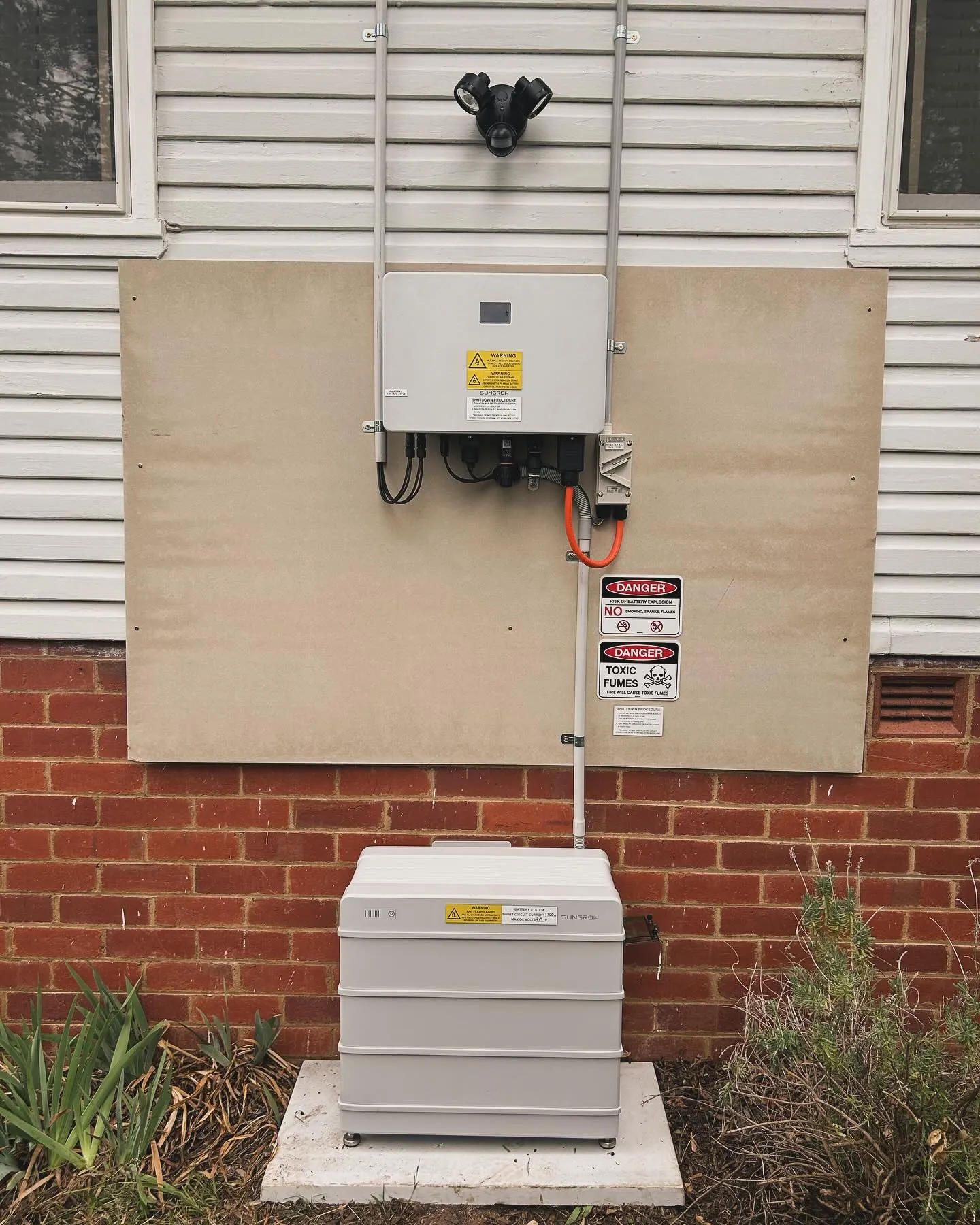
Switchboard surge protection is a small device, often called a surge diverter or surge protection device (SPD), that a licensed electrician fits inside your switchboard. Energy Safe Victoria describes it as capturing voltage spikes in the wiring, such as those from a lightning strike, that would otherwise travel into the equipment in your home.
Because it sits where the power enters the house, it takes the edge off a surge before it reaches every circuit, including the hardwired appliances a power board cannot help. It is not compulsory for most homes, but it is worth thinking about if you have:
- Expensive electronics, a home theatre or a home office
- Solar panels, a battery or an EV charger
- A rural or semi-rural block at the end of a long overhead line
- A switchboard upgrade coming up anyway, which is the easiest time to add it
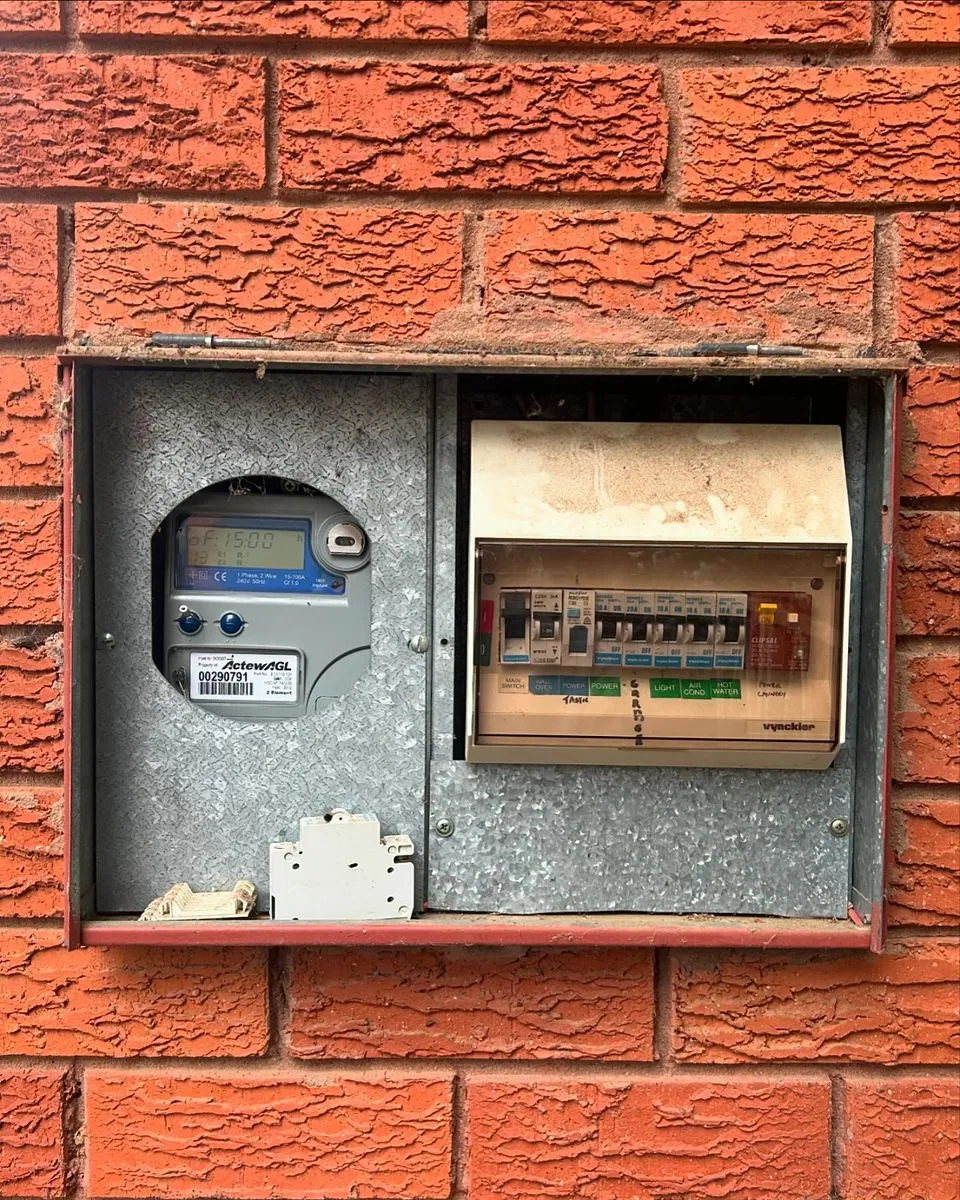
The two layers work together. The switchboard device handles the bulk of a surge and a good power board catches what is left at your most sensitive gear. Neither replaces a safety switch, and Energy Safe Victoria is clear that surge diverters do not protect people from electric shock. If your board is old or full, our switchboards and power team can tell you whether there is room or whether the board needs work first.
Why do safety switches trip in storms and wet weather?
A safety switch (also called an RCD) watches the current going out and coming back on each circuit. If some of it leaks to earth, which is what happens when current flows through water or a person, it turns the power off within 0.03 of a second.
In a storm, water finds its way into places it should not: an outdoor power point with a missing cover, a garden light with a perished seal, a pump, a cable joint buried in the garden, or a light fitting under a leaking roof. That moisture gives current a path to earth and the safety switch trips. It is protecting you, not failing.
Circuit breakers can also trip in a storm if a surge or a fault causes a short circuit. Our guide on why a circuit breaker keeps tripping covers the usual causes in more detail.
What to do:
- Unplug anything outdoors and anything that got wet.
- Try resetting the safety switch once.
- If it trips again straight away, leave it off. There is a fault that needs finding.
Do not keep resetting it, and do not go outside in a storm to check equipment. If a switchboard has been damaged by water or the weather, do not touch it at all.
What should I do when the power goes out in a storm?
First check whether it is just your home. If your neighbours still have power, the fault is probably inside your property, so check your switchboard for a tripped safety switch or breaker. If the street is dark, check Evoenergy’s outage map and report the outage on 13 10 93 if it is not listed. Stay well away from any fallen or low powerlines and treat them as live.
While you wait, Evoenergy and Energy Safe Victoria both recommend unplugging electronics and switching off heating and cooking appliances, so nothing starts up unattended when the power comes back.
How do I safely reset my power after an outage?
Energy Safe Victoria sets out a simple order once the power is back or you are ready to restore it yourself:
- Check for any damage to cables, wiring or electrical equipment. If you find any, do not turn the power on. Call a licensed electrician.
- Unplug or turn off appliances, and switch off the circuit breakers and safety switches on the board.
- Turn on the main switch.
- Turn on each circuit breaker one at a time.
- Test each safety switch by holding the test button for five seconds. It should turn the power off straight away. Reset it and test it a second time.
- If a safety switch fails the test, turn it off and have it replaced by a licensed electrician.
- Switch your appliances back on gradually.
When should I call an electrician after a storm?
Call a licensed electrician if a safety switch or breaker will not stay on, you notice a burning smell or scorch marks at the board, you get a tingle from a tap or appliance, lights are dull or flickering, or anything outdoors was flooded or damaged. Our emergency electrical page covers these jobs.
We work during business hours and will tell you honestly how soon we can get there. If something is dangerous outside business hours, switch off at the main switch if it is safe to do so and call Evoenergy’s faults line on 13 10 93. For storm damage to the house itself, call the ACT SES on 132 500, and in a life-threatening emergency call 000.
Frequently asked questions
Do surge protector power boards actually work?
They help with the smaller spikes and surges that come through the power supply, and a good one will show a light that tells you the protection is still active. CHOICE notes that some boards say they do not protect against lightning at all, so read the packaging. No power board will survive a direct strike on your home.
Do I need surge protection on my switchboard?
It is not compulsory for most Canberra homes, but it is worth considering if you have expensive electronics, solar, a battery or an EV charger, or you are on an exposed rural block. A licensed electrician fits a surge protection device on the switchboard, and it pairs well with surge protected power boards for your most valuable gear.
Is a safety switch the same as a surge protector?
No. A safety switch (RCD) watches for current leaking to earth and turns the power off within 0.03 of a second to protect people from electric shock. A surge diverter captures voltage spikes to protect equipment. Energy Safe Victoria points out that surge diverters do not protect people from shock.
Why does my safety switch trip when it rains?
Usually because water has got into something outdoors, such as a power point, a garden light, a pump or a cable joint, and current is leaking to earth. The safety switch is doing its job. Unplug outdoor equipment and try resetting it once. If it still trips, leave it off and call a licensed electrician.
Should I unplug my TV and computer during a thunderstorm?
Yes, if you can do it before the storm arrives. Evoenergy recommends unplugging electronic equipment that may be affected by a power surge. Do not go outside during a storm to turn things off, and do not handle anything that is wet.
Who do I call if the power goes out in a storm?
Check Evoenergy's outage map first. If your outage is not listed, call Evoenergy on 13 10 93. For storm damage to your home, such as a fallen tree, call the ACT SES on 132 500, and in a life-threatening emergency call 000.
Conclusion
Canberra's summer storms are short and sharp, and the damage they do to electronics usually comes through the wiring rather than the sky. A good surge protector power board covers your most valuable devices, switchboard surge protection covers the rest of the house, and working safety switches protect the people inside. If your safety switch keeps tripping after rain, or you want surge protection added to your board, Fused Electrical Co can help during business hours. We are a family owned and run Canberra business, licensed and insured, with fixed-price quotes and a reply within 24 hours. Call 0434 913 935 or request your free quote online today.
Published Date:
Link copied!
Talk to a licensed Canberra electrician.
Family owned, rated 5.0 from 163 Google reviews. Serving Canberra, the ACT and Queanbeyan.
Article Sources / Publishing Guidelines
Sources
- energysafe.vic.gov.au · household wiring
- energysafe.vic.gov.au · storms and energy safety
- evoenergy.com.au · Extreme weather
- evoenergy.com.au · Outages
- esa.act.gov.au · what do during and after storm
- electricalsafety.qld.gov.au · electrical safety during storms
- choice.com.au · ups and surge protectors
- allianz.com.au · surge protectors
- bom.gov.au · 2006.summary.shtml
At Fused Electrical Co, we are committed to publishing content that is accurate, trustworthy, and useful for our readers. To maintain these standards, we follow a rigorous process:
- All content is crafted to be clear, helpful, and regularly updated.
- We adhere to strict practices, including:
Editorial Guidelines
Fact-Check Content
Vet Expert Sources
Content Creation Process - If you have any questions, concerns, or if you’ve found an error in our content, please contact us.