

 Key Takeaways
- Ceramic fuses are easy to spot
If your board has white or cream plug-in blocks that pull out, with a short length of wire inside each one, you have rewireable ceramic fuses rather than circuit breakers.
- They protect wiring, not people
A fuse can stop a cable overheating, but it does nothing to stop an electric shock. Old fuse boards usually have no safety switches, and the wrong fuse wire can cause damage or start a fire.
- Like-for-like replacement is not allowed
Under the wiring rules, an electrician cannot replace a rewireable fuse with another rewireable fuse. It has to become a circuit breaker, which usually means a new switchboard.
- Common in 1970s and 80s Canberra homes
Many houses in Tuggeranong and Belconnen still run on their original board. Replacing it is often the single biggest safety improvement an older home can get.
A ceramic fuse is the old-style rewireable fuse found in switchboards built before circuit breakers became standard. You can tell you have them if your fuse box has a row of white or cream ceramic blocks that pull out of the board, each holding a short length of fuse wire between two screws. When too much current flows, the wire melts and the circuit goes dead. If your board has small switches that flick up and down instead, you have circuit breakers, not fuses.
Ceramic fuses are not illegal to keep, but they are a weak point in an older home. They only protect the wiring, not the people using it. Boards that still have them usually have no safety switches. And when one fails, the wiring rules do not allow an electrician to put in another rewireable fuse, so the fix is almost always a new switchboard. Below we cover how to identify them, the real risks, why the “just rewire it” approach has had its day, and what replacement involves. Our switchboards and power page has more on how we handle the work.
How do I know if I have ceramic fuses?
Open your meter box or switchboard cover and look at what controls each circuit. Signs you have rewireable ceramic fuses:
- Pull-out blocks made of white, cream or brown porcelain, often with a coloured dot or a number such as 8, 16 or 20 stamped on the front
- A length of thin wire visible inside the fuse carrier when it is pulled out, running between two small screws
- No toggle switches for the lights and power circuits, or only one or two breakers added later beside the fuses
- No “Test” button anywhere on the board, which usually means no safety switch
- A black or dark brown backing panel, common on boards of the same era
Do not pull fuses out while the power is on, and do not touch the backing panel. Older panels can contain asbestos (more on that below). A photo taken from a safe distance is all an electrician needs to tell you what you have.
Are ceramic fuses dangerous?
They are not dangerous in the sense that they will fail tomorrow. Plenty have worked for 40 or 50 years. The problems are what they cannot do, and what happens when they are handled.
They do not protect people from electric shock
A fuse or circuit breaker is there to stop a cable overheating when too much current flows. It does nothing to stop a person getting a shock. That is the job of a safety switch (an RCD), which Energy Safe Victoria describes as a device that detects a problem and turns the power off within 0.03 of a second. Most old fuse boards have no safety switch at all, which is the biggest gap.
The wrong fuse wire is a fire risk
When a ceramic fuse blows, someone has to replace the wire. Queensland’s Electrical Safety Office warns never to use an oversize fuse wire, because it can damage the installation wiring or start a fire. In practice, people do grab whatever wire is in the drawer, or a fuse that was rewired years ago with the wrong rating is still sitting in the board. Heavier wire means the cable can overheat inside the wall without the fuse ever blowing.
Old boards are under more load than they were built for
These boards were designed for a house with a stove, a hot water system and a few lights. Add split systems, a dishwasher, a home office and an induction cooktop, and the circuits are working much harder. Fuses that blow often are usually a sign the board and circuits have been outgrown, not that the fuse is faulty.
Can I just replace a ceramic fuse with another one?
No, and neither can your electrician. The wiring rules (AS/NZS 3000) do not allow a semi-enclosed rewireable fuse to be replaced with another rewireable fuse. A Building and Energy factsheet from the WA regulator puts it plainly: the electrician must replace the fuse with a circuit breaker.
That rule only applies when the fuse itself is being repaired or replaced. If an electrician is fixing something unrelated on the board, such as the main switch, the fuses can stay. But once a fuse carrier cracks, a fuse base burns or a circuit needs work, the old fuse cannot go back in.
On most old boards there is no room or safe way to fit a modern circuit breaker beside the existing fuses, so the practical answer is a new switchboard. And when a switchboard is replaced, the wiring rules require safety switch protection on all of the applicable circuits it supplies. The Electrical Regulatory Authorities Council advisory note sets this out. So one blown fuse can turn into a full upgrade, which is why it pays to plan for it before the fuse goes on a cold night.
If a fuse blows in your home, turn off and unplug whatever was running on that circuit, then call a licensed electrician. If the same fuse keeps blowing, there is a fault on the circuit or an appliance that needs finding, and rewiring the fuse will not fix it.
Why are ceramic fuses common in Canberra homes?
Canberra’s suburbs were built in waves, and the age of the house tells you a lot about the board. Belconnen began in 1966 with Aranda, and most of the district was built through the 1970s and into the 80s. In Tuggeranong, the first families moved into Kambah in 1974 and Wanniassa a year later.
Many of these homes still run on their original switchboard. When we open the meter box in a 1970s or early 80s house, we often find ceramic fuses, no safety switches on the power circuits and a few circuits that previous owners have extended over the years. Switchboard work is the job we are asked to quote most often across Canberra, and older boards like these are a big part of it.
What does replacing a ceramic fuse box involve?
Replacing an old fuse box means swapping it for a modern switchboard with a circuit breaker and safety switch on each circuit, usually combined into one device called an RCBO. A typical job looks like this:
- Inspection. We check each circuit, the main switch, the earthing, the meter box and the backing panel.
- Asbestos check. Panels from this era may contain asbestos. In the ACT, electricians who work with these materials must complete asbestos training required by WorkSafe ACT, and some panels need a licensed removalist.
- Power off and new board in. The house is without power while the old fuses come out and the new board goes in. Each circuit is connected to its own protection device and labelled.
- Testing. Every circuit is tested before the power goes back on. This sometimes finds faults the old fuses were hiding, such as damaged insulation on a cable.
- Certificate. In the ACT, a Certificate of Electrical Safety is lodged with Access Canberra within 14 days of testing, and you get a copy.
It is also a good time to plan ahead. If you are thinking about solar, an EV charger, induction cooking or more air conditioning, those circuits can be allowed for in the new board instead of being squeezed in later.
For prices, our guide to switchboard upgrade costs in Canberra covers typical ranges and what pushes a job up or down. If your power keeps cutting out on a newer board, our article on why a circuit breaker keeps tripping explains the usual causes.
Should I replace my fuse box now or wait?
There is no rule that forces you to upgrade a working fuse board today. But we would recommend booking it sooner rather than later if:
- Fuses blow regularly, or someone has rewired a fuse with heavier wire
- There are no safety switches, especially with children in the house
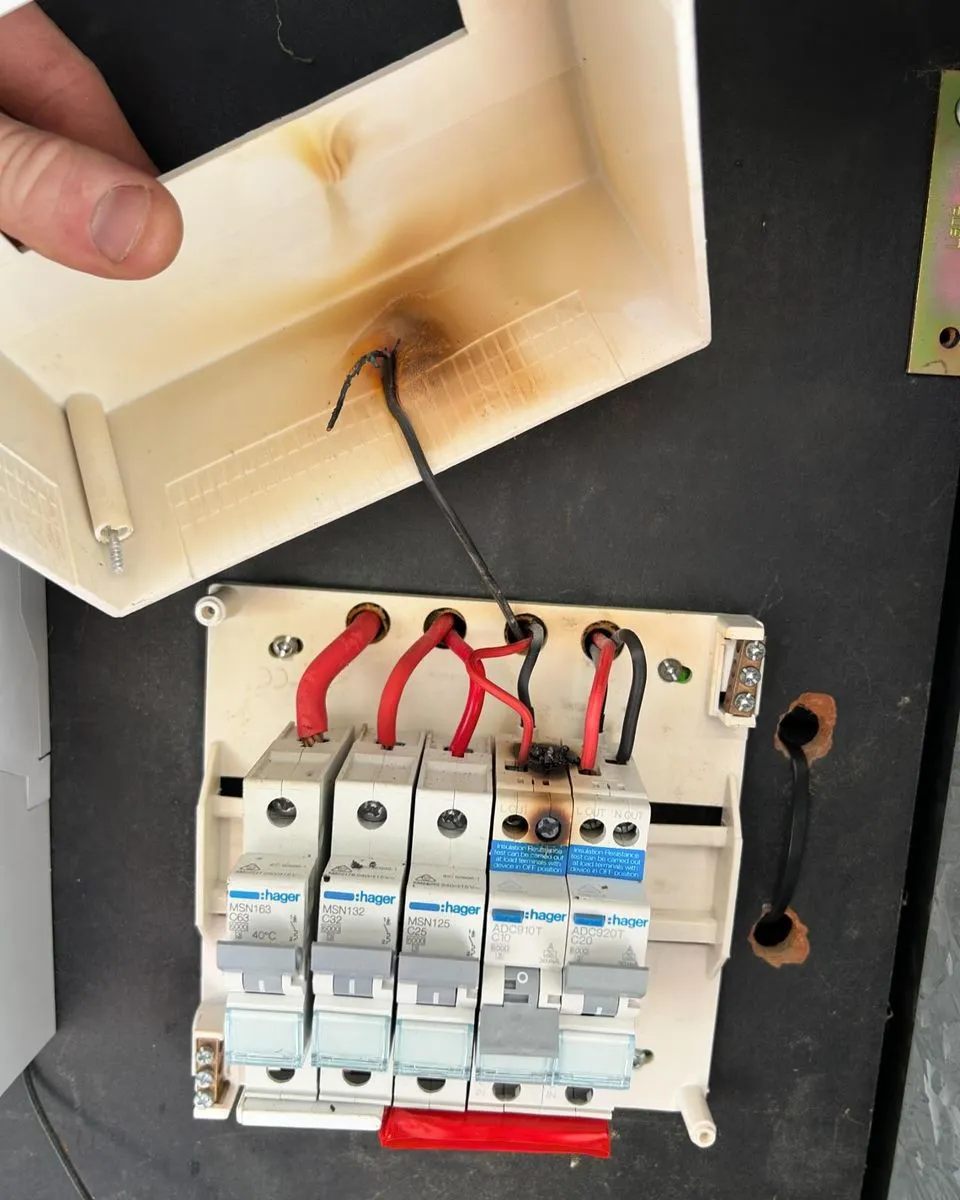
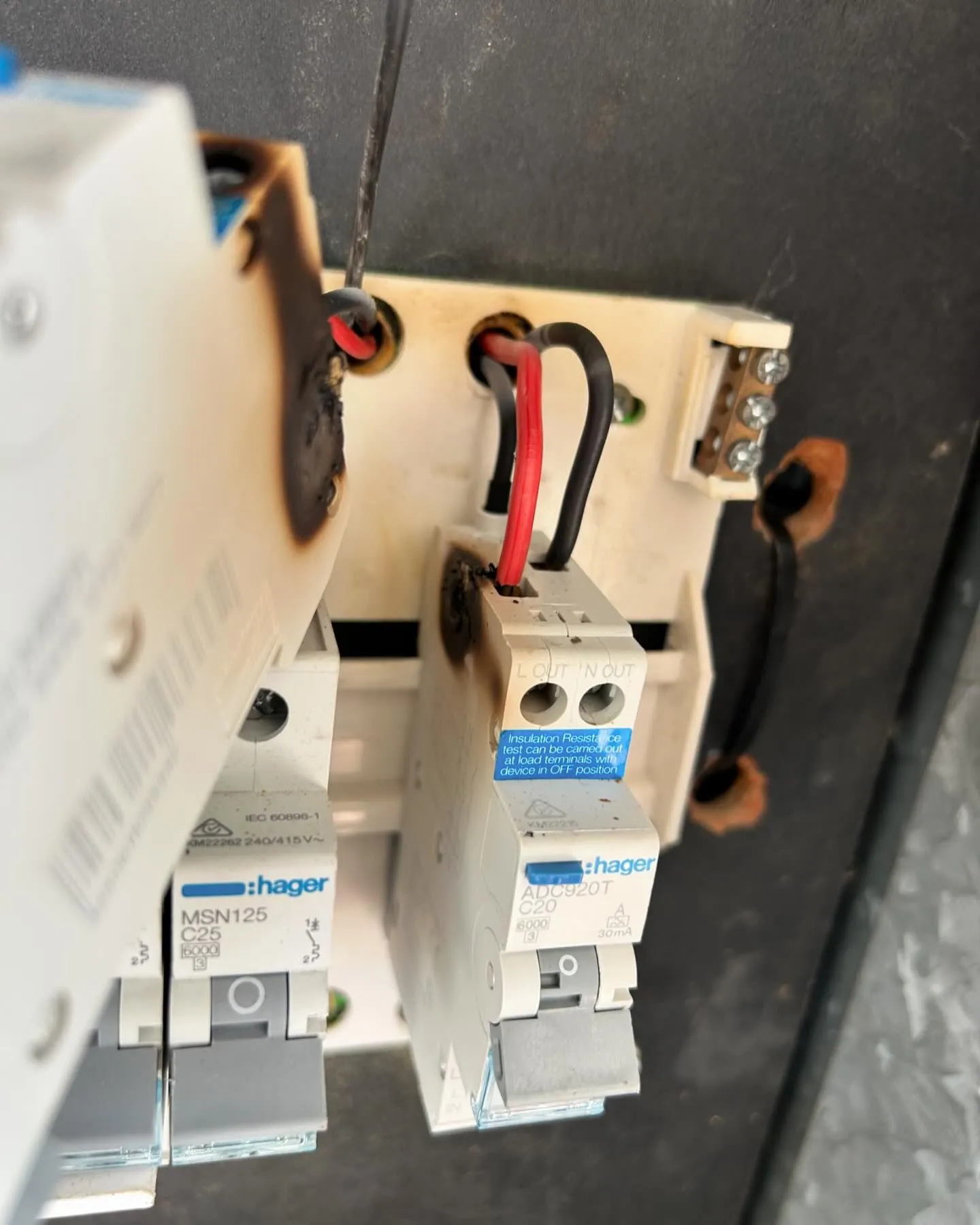
- You smell burning, see scorch marks or hear buzzing at the board
- You are buying or renovating a 1970s or 80s home
- You are planning solar, an EV charger or new appliances
If none of those apply, have the board checked by a licensed electrician so you know where you stand, and plan the upgrade on your terms rather than after a fuse fails. Our switchboards and power team can look at your board and give you a fixed price before any work starts.
Frequently asked questions
Is it illegal to have ceramic fuses in the ACT?
No. A working ceramic fuse board is not against the rules, and nothing forces you to replace it today. The rules apply when work is done: a rewireable fuse cannot be replaced with another one, and a replacement switchboard needs safety switch protection on the circuits it supplies.
Can I rewire a blown fuse myself?
We recommend you don't. Queensland's Electrical Safety Office warns never to use oversize fuse wire, because it can damage the wiring or start a fire. Turn off and unplug whatever was running on that circuit and call a licensed electrician, especially if the same fuse keeps blowing.
What is the difference between a fuse and a safety switch?
A fuse stops a cable overheating when too much current flows, but it does nothing to stop an electric shock. A safety switch (RCD) detects a problem and turns the power off within 0.03 of a second. Most old fuse boards have fuses only, so there is no shock protection at all.
Do old fuse boards contain asbestos?
Some do. The black or dark brown backing panels common on boards of that era can contain asbestos, so don't drill, sand or remove the panel yourself. In the ACT, electricians who work with these materials need the asbestos training WorkSafe ACT requires, and some panels need a licensed removalist.
Will I need a new switchboard to add solar or an EV charger?
Usually, if you still have ceramic fuses. New circuits need safety switch protection and room on the board, and most old fuse boards have neither. Planning solar, an EV charger or induction cooking into the new board at the same time saves squeezing them in later.
Who certifies a fuse box replacement in Canberra?
The licensed electrician who does the work tests every circuit and lodges a Certificate of Electrical Safety with Access Canberra within 14 days of testing. You should get a copy for your records.
Conclusion
Ceramic fuses did their job for decades, but they only protect the wiring, they are easy to get wrong when they blow, and they cannot be replaced like for like. If your Canberra home still has them, the practical fix is a modern board with circuit breakers and safety switches, done by a licensed electrician and certified with Access Canberra. Fused Electrical Co is a family owned and run Canberra business, licensed and insured, and we give fixed-price quotes and reply within 24 hours. Send us a photo of your fuse box, call 0434 913 935 or request your free quote online today.
Published Date:
Link copied!
Talk to a licensed Canberra electrician.
Family owned, rated 5.0 from 163 Google reviews. Serving Canberra, the ACT and Queanbeyan.
Article Sources / Publishing Guidelines
Sources
- wa.gov.au · switchboard panel repair work and asbestos safety factsheet
- electricalsafety.qld.gov.au · re wiring fuses
- energysafe.vic.gov.au · household wiring
- erac.gov.au · ERAC AdvisoryNote RCDsClause2.6.3.2.5
- planning.act.gov.au · electrical inspections
- worksafe.act.gov.au · Guidance note working safely with asbestos containing materials
- en.wikipedia.org · Belconnen
- en.wikipedia.org · Tuggeranong
At Fused Electrical Co, we are committed to publishing content that is accurate, trustworthy, and useful for our readers. To maintain these standards, we follow a rigorous process:
- All content is crafted to be clear, helpful, and regularly updated.
- We adhere to strict practices, including:
Editorial Guidelines
Fact-Check Content
Vet Expert Sources
Content Creation Process - If you have any questions, concerns, or if you’ve found an error in our content, please contact us.