

 Key Takeaways
- Worth it for some homes, not all
A battery pays off best when you export a lot of solar during the day and use a lot of power in the evening and overnight. CHOICE's worked example for Canberra shows a payback of about 12 years, a little longer than a typical 10 year warranty.
- The federal discount is shrinking
The Cheaper Home Batteries Program targets around a 30% discount. The value per kWh drops every six months and is lower for the part of a battery above 14 kWh, so size matters.
- Backup is not automatic
Many batteries do not keep the lights on in a blackout unless the system is designed and wired for backup. Ask for it in writing if it matters to you.
- Waiting is a fair choice
If you have no solar, use little power at night, or may sell soon, a battery is unlikely to pay for itself. Planning the switchboard and wiring now still makes a later battery cheaper to add.
A solar battery is worth it in Canberra for some homes, but not for every home. The ones that come out ahead already have solar, send a lot of it back to the grid during the day for a small feed-in credit, and then buy power back in the evening and overnight. CHOICE estimates Canberra’s payback at about 12.1 years in its worked example, which assumes the federal discount only and about 7 kWh of overnight use (CHOICE). That is a little longer than the typical 10 year warranty, so the decision comes down to how well a battery fits the way your household uses power.
The federal Cheaper Home Batteries Program helps by taking around 30% off the upfront price, and ACT homeowners can also borrow for a battery through the Sustainable Household Scheme. This guide covers how to work out whether the numbers stack up, what the discount is worth right now, backup power, the electrical work involved, and who is better off waiting. For how we install solar and batteries, see our solar and batteries page.
How do you work out if a battery will pay for itself?
The basic sum is simple: how much grid power will the battery replace each year, and what is that worth to you? A battery saves money by storing solar you would otherwise export, then using it in the evening instead of buying power from the grid. Each kWh you shift saves roughly the difference between your evening usage rate and your feed-in rate.
To get a realistic number, look at three things:
- Your spare solar. Your bill or retailer app shows how much you export. If you export very little in winter, a battery will sit partly empty for months.
- Your evening and overnight use. Cooking, heating, hot water on a night timer and EV charging all count. If you use little power after dark, there is not much for a battery to replace.
- The battery size. A battery bigger than your spare solar or your night-time use costs more without saving more.
Canberra’s winters work against batteries a little. Short days mean less solar to store, just when heating pushes evening use up. A home with a large solar system, or one that runs its heat pump and dishwasher in the daytime, gets more out of a battery through the cold months.
What is the Cheaper Home Batteries discount worth?
The federal Cheaper Home Batteries Program works through small-scale technology certificates. Your installer creates certificates based on the battery’s usable capacity and takes their value off your invoice, so there is no separate claim to lodge. The program aims for around a 30% discount on the upfront cost and runs until 2030.
Key details as of October 2026:
- The rate is dropping. From May 2026 the certificate factor fell from 8.4 to 6.8 per kWh, which CHOICE puts at about $272 per kWh for May to December 2026, before installer and agent fees. It steps down every six months after that.
- Bigger batteries get less per kWh. From 1 May 2026, the full rate applies to the first 14 kWh, 60% of the rate to the part between 14 and 28 kWh, and 15% to the part between 28 and 50 kWh (Clean Energy Regulator).
- Eligibility. The battery must be new, between 5 and 100 kWh, installed with new or existing rooftop solar, on the Clean Energy Council approved list, and installed by an accredited installer with battery endorsement. On-grid batteries must be able to join a virtual power plant (VPP), though joining one is optional (Clean Energy Regulator, DCCEEW).
Because the rate keeps falling while battery prices also fall, rushing in purely to beat the next step-down is rarely the deciding factor. Getting the size right matters more.
How much does a solar battery cost in Canberra?
It depends on the home, and two quotes for the “same” battery can differ a lot once the electrical work is counted. We give a free fixed-price quote after looking at your solar, your switchboard and where the battery would go. These are the things that move the price:
- Battery size. Bigger batteries cost more, and each kWh above 14 kWh attracts a smaller federal discount, so the extra capacity is dearer. Size it to your spare solar and evening use, not the biggest unit on offer.
- Brand and warranty. Batteries vary in cell chemistry, warranty length, guaranteed capacity at the end of the warranty and how well they integrate with your inverter.
- Inverter. A battery needs either a hybrid inverter or its own battery inverter. If your existing solar inverter is old or not compatible, it may need replacing, which is often the biggest single variable.
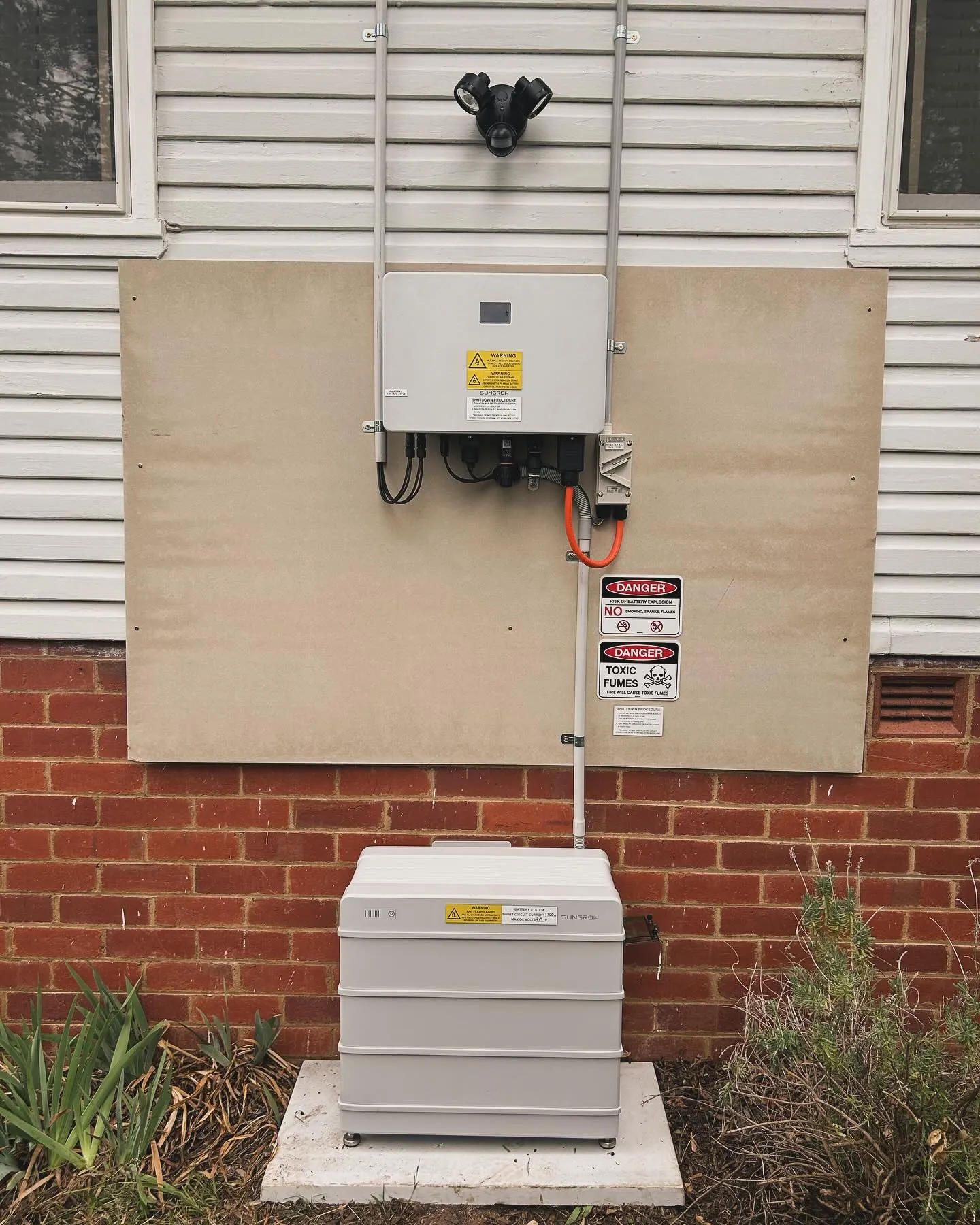
- Backup. A battery that keeps circuits running in a blackout needs a backup gateway or changeover device and some rewiring of the switchboard. Whole-of-home backup costs more than a few essential circuits.
- Switchboard condition. Older Canberra boards with ceramic fuses or no spare space may need an upgrade before a battery can be connected.
- Location and cabling. AS/NZS 5139 limits where a battery can go. A spot close to the switchboard and inverter keeps cable runs short. A long run, a brick wall to penetrate or a mounting frame adds time.
- Approvals and monitoring. Network approval from Evoenergy, certification and setting up monitoring or a VPP connection are part of every job.
Ask any installer to break the quote into battery, inverter, backup and electrical work, and to show the federal discount as its own line. That makes quotes far easier to compare. Our solar and batteries page explains how we approach it.
ACT loans for batteries
Household battery storage is one of the eligible products under the ACT Sustainable Household Scheme. Eligible homeowners can borrow $2,000 to $20,000 at 3% interest over up to 10 years, with no upfront fees, after attending a free one-hour workshop. Previous participants are capped at $15,000 over the life of the scheme. Concession card holders in the Home Energy Support Program can get zero-interest loans. A loan spreads the cost, but it does not change the payback maths, so run the numbers first.
Will a battery keep my power on in a blackout?
Not always, and it is a common misunderstanding. Many battery systems shut down with the grid unless they are designed and wired for backup. Backup usually needs a compatible inverter, a backup gateway or changeover device, and some circuits moved onto a separate backup section of the switchboard.
Most backup setups cover essential circuits such as the fridge, lights, internet and a few power points, not the oven or ducted heating. If backup matters to you, perhaps for medical equipment or working from home, say so up front and make sure the quote lists exactly which circuits stay on.
What electrical work does a battery need?
A battery is an electrical installation first. The installer has to:
- Check there is room on the switchboard, or plan an upgrade if there is not. Our guide to switchboard upgrade costs in Canberra explains when that is needed.
- Pick a compliant location. The Australian standard for battery installations (AS/NZS 5139) limits where batteries can go in a home, so the garage wall is often the spot.
- Apply to Evoenergy. Solar and battery systems need Evoenergy approval before connection, which the installer arranges.
- Test, certify and lodge the Certificate of Electrical Safety.
If you are adding a battery to an older solar system, the existing inverter may not be compatible, which is a common reason for a quote to jump.
Who should wait on a battery?
A battery is probably not worth it for you yet if:
- You have no solar, or a small system that exports little.
- Most of your power is used during the day, when solar already covers it.
- You expect to sell within a few years.
- Your switchboard needs replacing first, and the budget only stretches to one job.
- You have bigger savings available elsewhere, such as replacing an old electric hot water tank with a heat pump.
Waiting does not mean doing nothing. If you are upgrading your switchboard or installing solar now, ask for it to be set up battery ready, with space on the board and a compatible inverter, so adding one later costs less.
The short answer
For a Canberra home with good solar and heavy evening use, a correctly sized battery with the federal discount taken off can make financial sense, plus it gives you backup if you pay for it. For others, the payback runs past the warranty and waiting is fine. Our solar and batteries page explains how we size and install systems. Send us a recent power bill and a photo of your switchboard with your quote request, and we can give you an honest view on whether a battery suits your home before we visit.
Frequently asked questions
How long does a solar battery take to pay for itself in Canberra?
In CHOICE's worked example, a Canberra battery pays for itself in about 12.1 years, assuming the federal discount only and about 7 kWh of overnight use. That is a little longer than a typical 10 year warranty. Your own payback depends on how much solar you export and how much power you use after dark.
Do I need solar panels to get the Cheaper Home Batteries discount?
Yes. The Clean Energy Regulator requires the battery to be installed with new or existing rooftop solar. It must also be new, between 5 and 100 kWh, on the Clean Energy Council approved list, and installed by an accredited installer with battery endorsement.
What size battery should I get?
Size it to your spare solar and your evening and overnight use, not the biggest unit on offer. A battery bigger than either costs more without saving more. The full federal rate also only applies to the first 14 kWh, with 60% of the rate for the part between 14 and 28 kWh.
Do I have to join a virtual power plant to get the discount?
No. On-grid batteries must be able to join a virtual power plant (VPP) to be eligible, but joining one is optional.
Can I get a loan for a home battery in the ACT?
Yes. Household battery storage is an eligible product under the Sustainable Household Scheme: eligible homeowners can borrow $2,000 to $20,000 at 3% interest over up to 10 years after a free workshop. A loan spreads the cost, but it does not change the payback maths, so run the numbers first.
Does a solar battery work well in a Canberra winter?
It works, but short days mean less solar to store just when heating pushes evening use up. A home with a large solar system, or one that runs its heat pump and dishwasher in the daytime, gets more out of a battery through the cold months.
Conclusion
A solar battery is worth it in Canberra when the numbers line up: plenty of spare solar, heavy evening use and a battery sized to match, with the federal discount taken off upfront. For other homes, waiting while prices fall is a sensible call, and the money may do more in a heat pump or better insulation first. The installed price depends on the battery, the size, your inverter and your switchboard, so we give a fixed price after looking at the job. Fused Electrical Co is a family owned and run Canberra business, licensed and insured, and we give fixed-price quotes and reply within 24 hours. Call us on 0434 913 935 or request your free quote online today.
Published Date:
Link copied!
Talk to a licensed Canberra electrician.
Family owned, rated 5.0 from 163 Google reviews. Serving Canberra, the ACT and Queanbeyan.
Article Sources / Publishing Guidelines
Sources
- cer.gov.au · batteries
- cer.gov.au · changes to cheaper home batteries program
- dcceew.gov.au · eligibility information
- choice.com.au · solar home battery rebate
- climatechoices.act.gov.au · shs
- evoenergy.com.au · connections overview
At Fused Electrical Co, we are committed to publishing content that is accurate, trustworthy, and useful for our readers. To maintain these standards, we follow a rigorous process:
- All content is crafted to be clear, helpful, and regularly updated.
- We adhere to strict practices, including:
Editorial Guidelines
Fact-Check Content
Vet Expert Sources
Content Creation Process - If you have any questions, concerns, or if you’ve found an error in our content, please contact us.