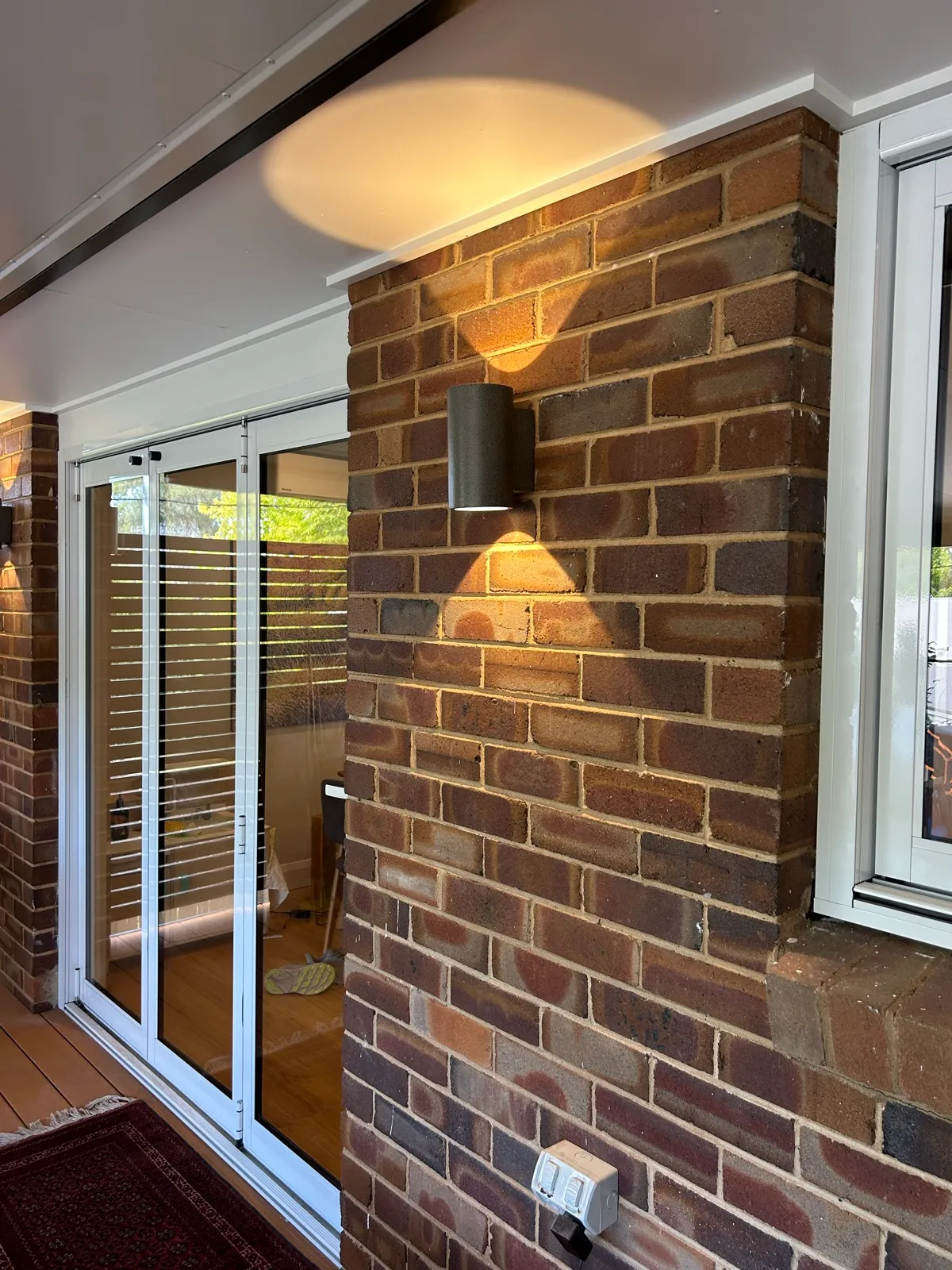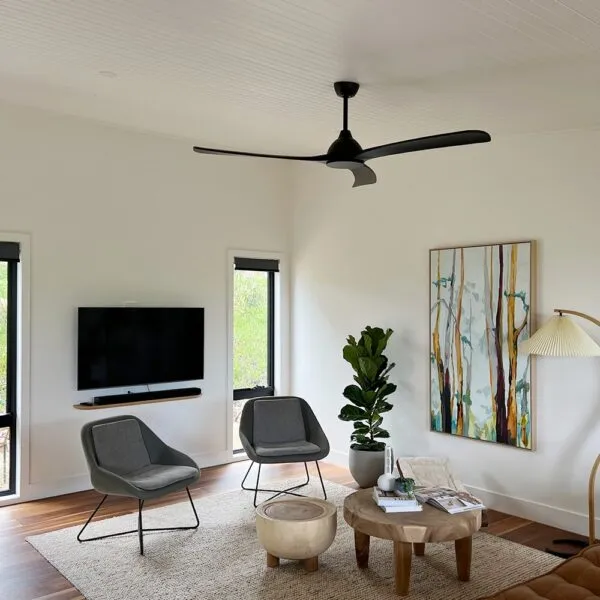


 Key Takeaways
- LEDs use far less power than halogens
The Australian Government's YourHome guide says LED bulbs use around 80% less electricity than halogens for the same light, and mains voltage halogen lamps are being phased out of sale.
- Choose IC-4 rated fittings
IC-4 rated LED downlights can be covered by ceiling insulation. Old halogen fittings cannot, which leaves gaps in the insulation and is a fire risk. In Canberra's winters those gaps cost you heating.
- Plan the room, not just the bulbs
Downlights work best as task lighting over benches and work areas. Choose by lumens, pick warm white (about 2700 to 3200K) for living areas, and check dimmers are LED compatible.
- Cost depends on fitting type and access
The price depends on how many lights, the fittings you choose and how easy the ceiling is to work in. Swapping like for like in an accessible ceiling is the simplest job. We give a free fixed-price quote after looking at it.
If your home still has halogen downlights, replacing them with LED downlights is one of the simplest electrical upgrades you can make. The Australian Government’s YourHome guide says LED bulbs use around 80% less electricity than halogens for the same amount of light, and last much longer. Mains voltage halogen lamps are also being phased out of sale in Australia, so replacement globes will only get harder to find.
The bigger reason in a Canberra home is the ceiling. Old halogen fittings run hot and cannot be covered with insulation, so each one leaves a hole in your ceiling insulation. Replacing them with IC-4 rated LED downlights lets the insulation go straight over the top. Below we cover how many downlights a room needs, which colour to choose, why the IC rating matters, dimmers, and what affects the cost of an upgrade. Our lighting page has more on the work we do.
Should I replace halogen downlights with LEDs?
In almost every case, yes. The government’s Energy Rating factsheet compares a 50 watt GU10 halogen with a 5 watt LED equivalent: over 15,000 hours the halogen uses about 750 kWh and the LED about 75 kWh. On the factsheet’s own electricity price, that is about $277.50 against $27.75 per light, and you would go through eight halogen globes in that time against one LED.
The rules are moving the same way. Under a 2024 national standard, a range of mains voltage halogen lamps is being phased out from 4 October 2025, with a grace period for existing stock, according to Energy Rating.
Can I just swap the globe?
Sometimes. A 240 volt GU10 halogen can often take an LED GU10 globe straight into the same fitting. Older 12 volt MR16 halogens run off a transformer in the ceiling, and an LED globe may flicker, buzz or fail early on an old transformer. And swapping the globe does not change the fitting itself, which may still need insulation clearance. In most homes we recommend replacing the whole fitting with an integrated LED downlight. It looks neater, it is rated for insulation, and there is no old transformer left in the roof.
IC-rated downlights and ceiling insulation
This is the part most people do not know about, and it matters for both safety and heating bills.
Halogen and incandescent downlights get hot. Insulation has to be kept clear of them so heat does not build up and start a fire. YourHome’s insulation installation guide says these older downlights cannot be covered with insulation and should be removed and replaced with IC-4 rated LEDs. IC stands for “insulation contact”: an IC-4 rated fitting can be abutted and covered by insulation.
The same guide notes some LED downlights are not IC rated. Those need a clearance or a fire safety barrier tested to AS/NZS 5110, and it is much simpler to use IC-4 rated LEDs in the first place. Check the fitting for an IC-4 marking, and look out for a “do not cover” symbol on the packaging or instructions.
Why this matters in Canberra
Canberra’s cold winters make ceiling insulation one of the most useful things in a house. Every downlight with a clearance around it is a gap where heat escapes. YourHome points out that each recessed light can also be a path for heated air to leak into the roof.
If you are adding or topping up insulation, the guide says Australian Standard AS 3999 requires an electrical safety assessment by a competent person first, which in practice means a licensed electrician. That is the right moment to replace old downlights. Rental owners have an extra reason: since 1 April 2023, ACT rentals with ceiling insulation below R2 must be upgraded to at least R5, according to the ACT Audit Office. Old halogen fittings in the way of that insulation need sorting first.
How many downlights do I need per room?
There is no single number, and more is not always better. YourHome warns against using downlights alone for general room lighting, because they make pools of light on the floor and leave the ceiling dark. It notes up to 6 downlights may be needed to light the same area as 1 pendant light.
A better approach is to plan each room by what happens there:
- Kitchens: downlights over benches, the sink and the cooktop, where you need clear task light
- Living rooms: fewer downlights, mixed with a pendant, wall lights or lamps, on separate switches or dimmers
- Bedrooms: often a single central light or a small group of downlights on a dimmer
- Bathrooms and laundries: enough even light for the mirror and benches
Choose by lumens, not watts. YourHome suggests about 800 lumens to light a small room from one source, 930 for a medium room and 1300 for a large room or bright work area. Add up the lumens of the downlights you are planning and you can see quickly whether a room will be too dim or too bright. Spacing matters as much as numbers, so we look at ceiling height, beam angle and where the furniture goes before suggesting a layout.
What colour temperature should I choose?
Colour temperature is measured in kelvin (K). YourHome gives these common ranges:
- Warm white, 2700 to 3200K: similar to old incandescent light, suited to living rooms and bedrooms
- Cool white, about 4100K: neutral light, suited to garages and workshops
- Daylight, 5500 to 6500K: cold, bright light, sometimes used in bathrooms and laundries
Warm white is the usual choice for living areas and bedrooms. Many LED downlights now have a switch on the driver to choose between colours, which helps if you are unsure. Also check the colour rendering index (CRI). YourHome says above 80 is usually fine, and above 90 is better where colour matters, such as kitchens and make-up mirrors.
Can LED downlights be dimmed?
Many can, but not all. Old dimmers built for halogens often do not work properly with LEDs, which shows up as flicker, buzzing or lights that will not dim fully down. YourHome recommends choosing an LED and dimmer combination that is listed as compatible, and getting an electrician to help if you run into trouble. When we replace downlights, we check the dimmer at the same time and replace it if it is not suited to the new fittings.
How much does an LED downlight upgrade cost?
It depends on the home. Two houses with the same number of downlights can be very different jobs once you get into the ceiling, which is why we give a free fixed-price quote after looking at it rather than a per-light figure that may not fit. The price depends on:
- Swap or new hole. Replacing an existing fitting is quicker than cutting new holes and running new cable.
- Ceiling access. A roomy roof space is quicker than a low pitch, a two-storey home or a flat ceiling with no access.
- Transformers and old wiring. Removing old transformers is part of the job. Brittle or damaged wiring found in an older ceiling may need repair.
- The fitting you choose. Basic fittings and premium, colour-selectable or smart fittings vary a lot in price.
- Dimmers and switching. New LED-compatible dimmers or extra switches add to the total.
- Number of lights and layout changes. Replacing ten fittings in their existing spots is a different job from redesigning a kitchen layout with new positions, extra circuits or separate switching for zones.
- Ceiling type and finish. Plasterboard is straightforward. Timber-lined, raked or older lath and plaster ceilings take more care to cut and patch, and holes left by old fittings that do not line up with the new ones may need patching and painting.
- Insulation work at the same time. If insulation is going in or being topped up, the safety check and the downlight swap can be done together, which saves a second trip into the roof.
Doing the whole house in one visit is usually better value than one room at a time, because the setup and roof access happen once. When you ask for a quote, a photo of the existing downlights, the number in each room and whether you have dimmers helps us give you an accurate fixed price quickly. Our lighting page covers the full range of lighting work.
Getting your downlights upgraded
We replace halogen downlights, install new LED lighting and fix old dimmers in homes across Canberra, from older houses in Tuggeranong to newer homes in Gungahlin. Every quote is a fixed price, we reply within 24 hours, and the work is done by licensed and insured electricians (licence 476229C). If you are planning ceiling insulation as well, let us know and we can do the electrical check and the lighting at the same time.
To see the full range of lighting work we do, visit our lighting page, or send us a photo of your current downlights with your quote request.
Frequently asked questions
Are halogen downlights being banned in Australia?
A range of mains voltage halogen lamps is being phased out under a 2024 national standard, starting 4 October 2025, with a grace period for existing stock. That covers 240 volt lamps such as GU10 halogens, so replacement globes will only get harder to find. It is a good reason to plan the switch to LED now rather than when the last globe fails.
Can ceiling insulation cover LED downlights?
Only if the fitting is IC-4 rated, which means it can be abutted and covered by insulation. Some LED downlights are not IC rated and need a clearance or a fire safety barrier tested to AS/NZS 5110. Old halogen fittings must never be covered, which is why they leave gaps in your insulation.
How much electricity do LED downlights save?
The Australian Government's YourHome guide says LED bulbs use around 80% less electricity than halogens for the same light. Energy Rating's comparison has a 50 watt GU10 halogen using about 750 kWh over 15,000 hours against about 75 kWh for a 5 watt LED, and needing eight globes to the LED's one.
Why do my LED downlights flicker or buzz?
The usual cause is an old dimmer made for halogens, or an LED globe running off an old 12 volt transformer in the ceiling. Choosing an LED and dimmer combination listed as compatible fixes most cases. When we replace downlights, we check the dimmer at the same time.
What is the best colour for LED downlights in a living room?
Warm white, about 2700 to 3200K, is the usual choice for living rooms and bedrooms, because it is close to the old incandescent light. Cool white (about 4100K) suits garages and workshops. If you are unsure, many fittings have a switch on the driver to change the colour.
Should I replace downlights before installing ceiling insulation in Canberra?
Yes, it is the right moment. Australian Standard AS 3999 requires an electrical safety assessment by a competent person before insulation goes in, and old halogen fittings cannot be covered. ACT rental owners also have to bring ceiling insulation below R2 up to at least R5, so halogens in the way need sorting first.
Conclusion
Upgrading from halogen to LED downlights cuts your lighting power use, lets you close the gaps in your ceiling insulation, and gets old hot fittings out of the roof space. The best results come from planning the room as a whole: the right number of lights in the right places, warm white for living areas, IC-4 rated fittings, and dimmers that are made for LEDs. The price depends on the fittings and the ceiling, so we quote a fixed price after looking at the job. Fused Electrical Co is a family owned and run Canberra business, licensed and insured, with fixed-price quotes and a reply within 24 hours. Call 0434 913 935 or request your free quote online today.
Published Date:
Link copied!
Talk to a licensed Canberra electrician.
Family owned, rated 5.0 from 163 Google reviews. Serving Canberra, the ACT and Queanbeyan.
Article Sources / Publishing Guidelines
Sources
- yourhome.gov.au · lighting
- yourhome.gov.au · insulation installation
- energyrating.gov.au · 711
- energyrating.gov.au · 691
- energyrating.gov.au · Phase out of inefficient lamps
- audit.act.gov.au · energy efficiency standard for rental properties
At Fused Electrical Co, we are committed to publishing content that is accurate, trustworthy, and useful for our readers. To maintain these standards, we follow a rigorous process:
- All content is crafted to be clear, helpful, and regularly updated.
- We adhere to strict practices, including:
Editorial Guidelines
Fact-Check Content
Vet Expert Sources
Content Creation Process - If you have any questions, concerns, or if you’ve found an error in our content, please contact us.