

 Key Takeaways
- Working smoke alarms are compulsory
Every ACT home needs working smoke alarms. Houses built after 1 November 1994 must have hardwired 240V alarms with battery backup. Older homes can use battery or hardwired alarms.
- Rentals have their own rules
A lessor cannot sign a tenancy agreement unless alarms complying with AS 3786 are installed on or near the ceiling, in each bedroom corridor or hallway and on every storey. The tenant replaces batteries when needed.
- Photoelectric and interconnected is the goal
ACT Fire & Rescue recommends hardwired, interconnected, photoelectric alarms wherever possible. If you use battery alarms, a photoelectric alarm with a 10-year lithium battery is the best option.
- Hardwired work needs a licensed electrician
A 10-year lithium alarm can be screwed to the ceiling yourself. Anything connected to your home's 240V wiring, including replacing a hardwired alarm, is electrical work for a licensed electrician.
Working smoke alarms are compulsory in every ACT home. If your house was built after 1 November 1994, the alarms must be hardwired (240V, connected to your home’s wiring, with a backup battery). Homes built before then can use battery or hardwired alarms (ACT Fire & Rescue). Rentals have extra rules: the lessor must install alarms that comply with Australian Standard AS 3786, on or near the ceiling, in every bedroom corridor or hallway and on every storey, and the tenant replaces the batteries.
Beyond the legal minimum, ACT Fire & Rescue recommends hardwired, interconnected, photoelectric alarms wherever possible. You can fit a battery alarm yourself, but installing, replacing or linking hardwired alarms is electrical work for a licensed electrician. This guide covers the rules for owners and landlords, which type of alarm to choose, where they go, and how to test and replace them. If you need alarms wired in, our switchboards and power page covers the electrical work we do around the home.
What are the smoke alarm rules for ACT homes?
For owner-occupied homes, the rules come down to two things: your alarms must work, and the type depends on when the house was built.
- Built after 1 November 1994. Hardwired 240V alarms with battery backup are required. ACT Fire & Rescue’s 2024 smoke alarm fact sheet adds that a hardwired alarm must be replaced with a hardwired alarm, so you cannot swap an old wired unit for a stick-on battery one.
- Built before November 1994. Battery or hardwired alarms are both allowed. Many older Canberra homes in suburbs like Kambah still run on battery alarms, and some have none that work at all.
Alarms should be installed to the manufacturer’s instructions and the National Construction Code, on or near the ceiling in bedrooms or in the corridor leading to them. If you are doing building work that needs approval, ask your certifier whether your alarms need to be brought up to the current standard as part of it.
What are the smoke alarm rules for ACT rental properties?
Rentals are covered by the Residential Tenancies Act 1997. Since the law changed in 2017 (with a deadline of 24 August 2018 for existing tenancies), a lessor cannot sign a tenancy agreement unless compliant smoke alarms are installed. The same applies to occupancy agreements, such as rooms in share houses.
The Residential Tenancies Regulation 1998 sets out what compliant means. Each alarm must:
- comply with AS 3786
- work
- be installed on or near the ceiling
- be either battery operated or hardwired.
Alarms must go in every corridor or hallway associated with a bedroom, on each storey that has a bedroom. If there is no corridor, the alarm goes between the bedrooms and the rest of the home. Each storey without a bedroom also needs an alarm.
The standard tenancy terms split the work. The lessor must install and maintain the alarms, and the tenant must replace the battery whenever necessary. ACT Fire & Rescue notes that alarms have a typical life of around 10 years and should be replaced by the owner as routine maintenance or when faulty.
Photoelectric or ionisation: which smoke alarm should you choose?
There are two common types of smoke detection:
- Photoelectric alarms use a light beam and sensor. They are better at detecting slow, smouldering fires, which can burn for hours before bursting into flame.
- Ionisation alarms respond to the tiny particles from fast, flaming fires but are slower to detect smouldering ones.
AS 3786 covers both types, so an ionisation alarm is not illegal in the ACT. ACT Fire & Rescue’s advice is clear though: if you have an ionisation alarm that is approaching its expiry date (usually 10 years) or has become faulty, replace it with a photoelectric one. If you are buying new, buy photoelectric.
Hardwired or 10-year lithium battery?
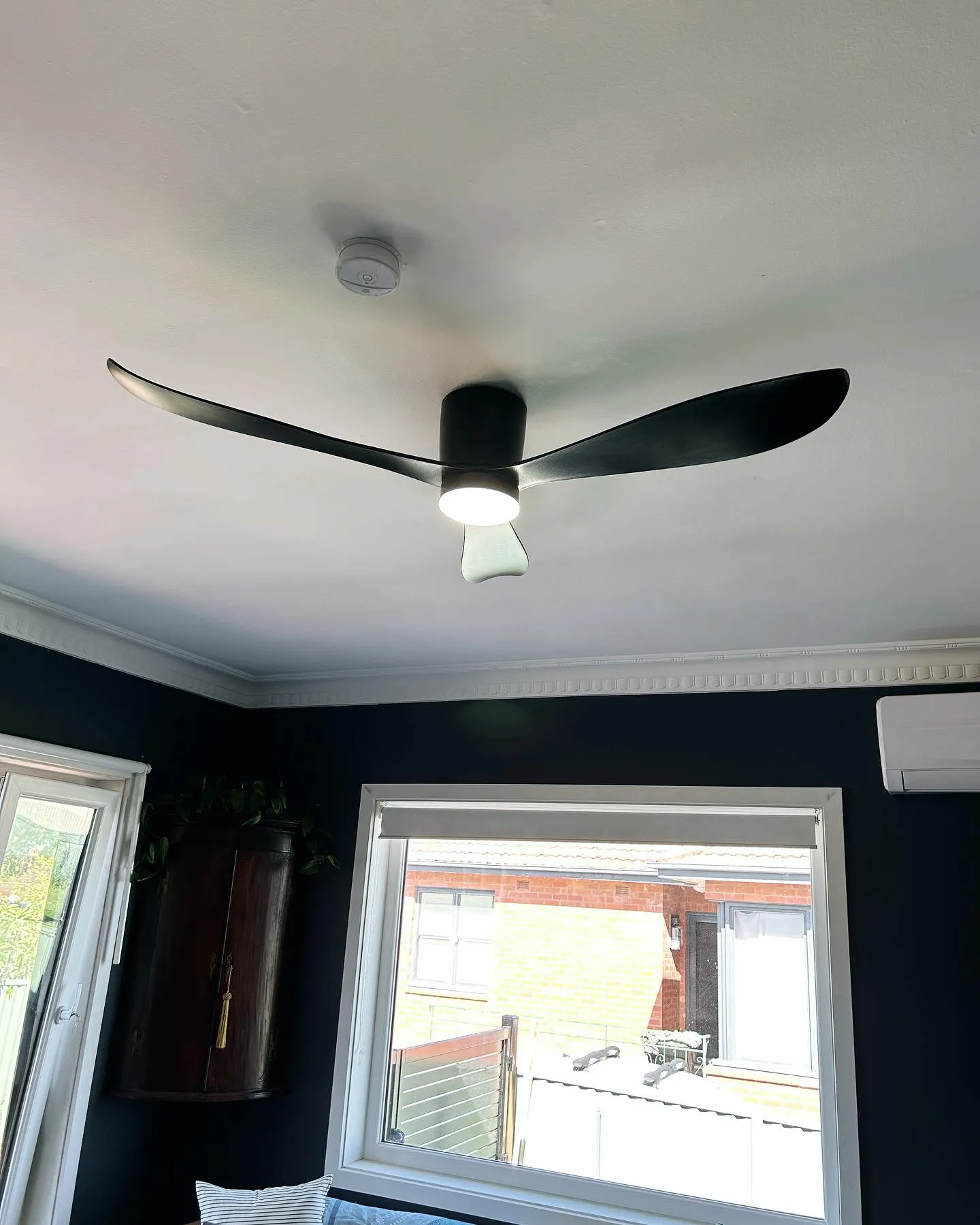
Hardwired alarms connect to your home’s 240V supply and have a battery backup for power cuts. They are what ACT Fire & Rescue recommends wherever possible, and they are required in homes built after November 1994.
10-year lithium alarms have a sealed battery that lasts as long as the alarm. ACT Fire & Rescue says that if you are using battery alarms, photoelectric alarms with a 10-year lithium battery are the best option. They are a sensible choice for older homes where running new cable is hard, and for rentals where tenants would otherwise need to remember yearly battery changes.
Alarms with replaceable 9V (lead or alkaline) batteries are the old standard. They need a new battery every year, which is easy to forget.
Should your smoke alarms be interconnected?
Interconnected alarms talk to each other, so when one goes off, they all go off. If a fire starts in the lounge at 2am, the alarm outside the bedrooms sounds straight away rather than waiting for smoke to reach it.
ACT Fire & Rescue recommends interconnected alarms in each bedroom, in bedroom corridors and on each level, and its 2024 fact sheet says alarms in a multi-level home should be on each level and interconnected. The tenancy regulation itself requires an alarm on each storey but does not mention interconnection.
Hardwired alarms can be linked by an interconnect cable run through the ceiling. Where that is hard, many brands offer wireless interconnection, which also works with 10-year lithium alarms. Just make sure all the alarms in the system are compatible with each other.
When do you need a licensed electrician?
You can fit a battery or 10-year lithium alarm yourself. It is a couple of screws into the ceiling and a test.
You need a licensed electrician to:
- install a new hardwired alarm or add one to an existing system
- replace a hardwired alarm (it must be replaced with another hardwired alarm)
- move a hardwired alarm, for example after a renovation changes where the bedrooms are
- run interconnect cable between hardwired alarms.
In the ACT, all electrical wiring work must be tested and certified by the licensed electrician who carried it out, and a certificate of electrical safety is lodged (ACT Planning, electrical inspections). For landlords and property managers, that certificate is also a handy record that the alarms were installed properly.
When we replace hardwired alarms, we check the circuit they run on and whether it has safety switch protection, which is often worth a look in older boards. Our switchboards and power work covers safety switches and new circuits if they are needed.
How do you test, clean and replace smoke alarms?
ACT Fire & Rescue’s maintenance schedule is simple:
- Every month: press and hold the test button for at least five seconds until you hear the beeps.
- Every six months: vacuum the dust off each alarm so smoke can reach the sensor and false alarms are less likely.
- Every year: replace lead or alkaline batteries. The end of daylight saving is a good reminder.
- Every 10 years: replace the alarms themselves, or earlier if the manufacturer says so.
Check the date on the back or side of each alarm. If you cannot find one, or it is more than 10 years old, it is due. When you replace alarms, replace them all at once and keep them the same brand if they are interconnected.
If an alarm is chirping, it is usually a low battery or, for a sealed lithium unit, the end of its life. If a hardwired alarm keeps chirping or sounding for no reason after a battery change, it may be faulty or the wiring may need checking. For homes that also have breakers or safety switches tripping, our guide to why a circuit breaker keeps tripping explains what to look for.
There is also help for people who are deaf or hard of hearing. Specialised alarms with strobes or vibrating pads are available, and ACT Fire & Rescue points people to the ACT Deafness Resource Centre for information on financial assistance.
Frequently asked questions
Do I need hardwired smoke alarms in the ACT?
If your house was built after 1 November 1994, yes. ACT Fire & Rescue says hardwired alarms are legally required in those homes, and a hardwired alarm must be replaced with another hardwired alarm. Homes built before then can have battery or hardwired alarms.
Are ionisation smoke alarms illegal in the ACT?
No. The tenancy rules call for alarms that comply with AS 3786, and that standard covers both photoelectric and ionisation types. ACT Fire & Rescue encourages you to replace ionisation alarms with photoelectric ones when they reach their expiry date (usually 10 years) or become faulty, because photoelectric alarms are better at picking up slow, smouldering fires.
Who replaces smoke alarm batteries in an ACT rental?
The tenant. The standard residential tenancy terms say the tenant must replace the battery in a smoke alarm whenever necessary. The lessor must install and maintain the alarms, which includes replacing faulty or expired units.
Can I install smoke alarms myself?
You can fit a battery alarm, such as a 10-year lithium unit, yourself by following the manufacturer's instructions. Installing, replacing, moving or interconnecting a hardwired 240V alarm is electrical wiring work, which in the ACT must be done, tested and certified by a licensed electrician.
How often should smoke alarms be replaced?
ACT Fire & Rescue says to replace smoke alarms every 10 years, or earlier if the manufacturer says so. Check the date printed on the back or side of each alarm. If there is no date, or it is past 10 years, it is due.
Why does my smoke alarm keep chirping?
A single chirp every minute or so usually means a low battery, or on a 10-year lithium alarm, that the alarm has reached the end of its life. Replace the battery or the alarm. If a hardwired alarm keeps chirping after the backup battery is replaced, have an electrician check it.
Conclusion
Smoke alarms are cheap insurance and the ACT rules are straightforward once you know your home's age and whether it is rented. Homes built after November 1994 need hardwired alarms, rentals need AS 3786 alarms in every bedroom corridor and on every storey, and ACT Fire & Rescue's advice is to go photoelectric and interconnected wherever you can. If your alarms are over 10 years old, chirping, or you want them hardwired and linked so they all sound together, that is a job for a licensed electrician. Fused Electrical Co is a family owned and run Canberra business, licensed and insured, and we give fixed-price quotes and reply within 24 hours. Call us on 0434 913 935 or request your free quote online today.
Published Date:
Link copied!
Talk to a licensed Canberra electrician.
Family owned, rated 5.0 from 163 Google reviews. Serving Canberra, the ACT and Queanbeyan.
Article Sources / Publishing Guidelines
Sources
- esa.act.gov.au · smoke alarms
- esa.act.gov.au · Smoke Alarm fact sheet 1 2024 Update
- esa.act.gov.au · smoke alarms ver2
- legislation.act.gov.au · 1997 84
- legislation.act.gov.au · 1998 17
- planning.act.gov.au · electrical inspections
At Fused Electrical Co, we are committed to publishing content that is accurate, trustworthy, and useful for our readers. To maintain these standards, we follow a rigorous process:
- All content is crafted to be clear, helpful, and regularly updated.
- We adhere to strict practices, including:
Editorial Guidelines
Fact-Check Content
Vet Expert Sources
Content Creation Process - If you have any questions, concerns, or if you’ve found an error in our content, please contact us.