

 Key Takeaways
- Each split needs its own circuit
A split system should be wired on a dedicated circuit from the switchboard with safety switch protection, sized to the unit's requirements. It should not share a power point circuit.
- Check the switchboard first
Older Canberra boards are often full or still have ceramic fuses. Adding one or more splits can mean a board upgrade, so plan every new circuit at once.
- Size it for Canberra winters
In Canberra a reverse cycle split often works harder heating in July than cooling in January. Use the cold zone rating on the Zoned Energy Rating Label when comparing models.
- Two licences are involved
Refrigerant work needs an ARC licence, and a restricted split licence does not cover multi-head systems. New wiring in the ACT needs an unrestricted electrical licence.
Installing a split system in Canberra is two jobs: the refrigeration work that mounts the units and connects the pipes, and the electrical work that powers it. The electrical side needs a dedicated circuit from your switchboard with safety switch protection, room on the board for that circuit, and a lockable isolating switch next to the outdoor unit. If the board is old or full, it may need work before the split can go in.
Get the electrical side planned before you pick a unit, especially if you want more than one. In Canberra the same split has to heat through frosty winters as well as cool in summer, so it should be sized for both. This guide covers the circuit, the switchboard, the isolator, sizing, how many units you need, where to put them and who is licensed to do what. Our heating and cooling page has more on the split system work we do.
Does a split system need its own circuit?
Yes. A fixed split system should be wired on its own dedicated circuit from the switchboard, with the cable and circuit breaker sized to the manufacturer’s installation requirements. Larger units draw a lot of current when the compressor starts, and putting one on an existing power point circuit is a common cause of tripping and overloaded cable. If your safety switch is already tripping, our guide to a tripping circuit breaker explains the usual causes.
The new circuit also needs RCD (safety switch) protection, and the cable run from the board to the outdoor unit has to be planned. Running it through the roof space or under the floor is usually tidier than clipping it along the outside wall.
Can your switchboard handle a split system?
This is the question that decides how simple the job is. We check three things:
- Space. Is there room on the board for a new circuit breaker and RCD? Many Canberra homes built in the 1970s and 80s, across Tuggeranong, Belconnen and Woden, have boards with no spare positions or still run on ceramic fuses.
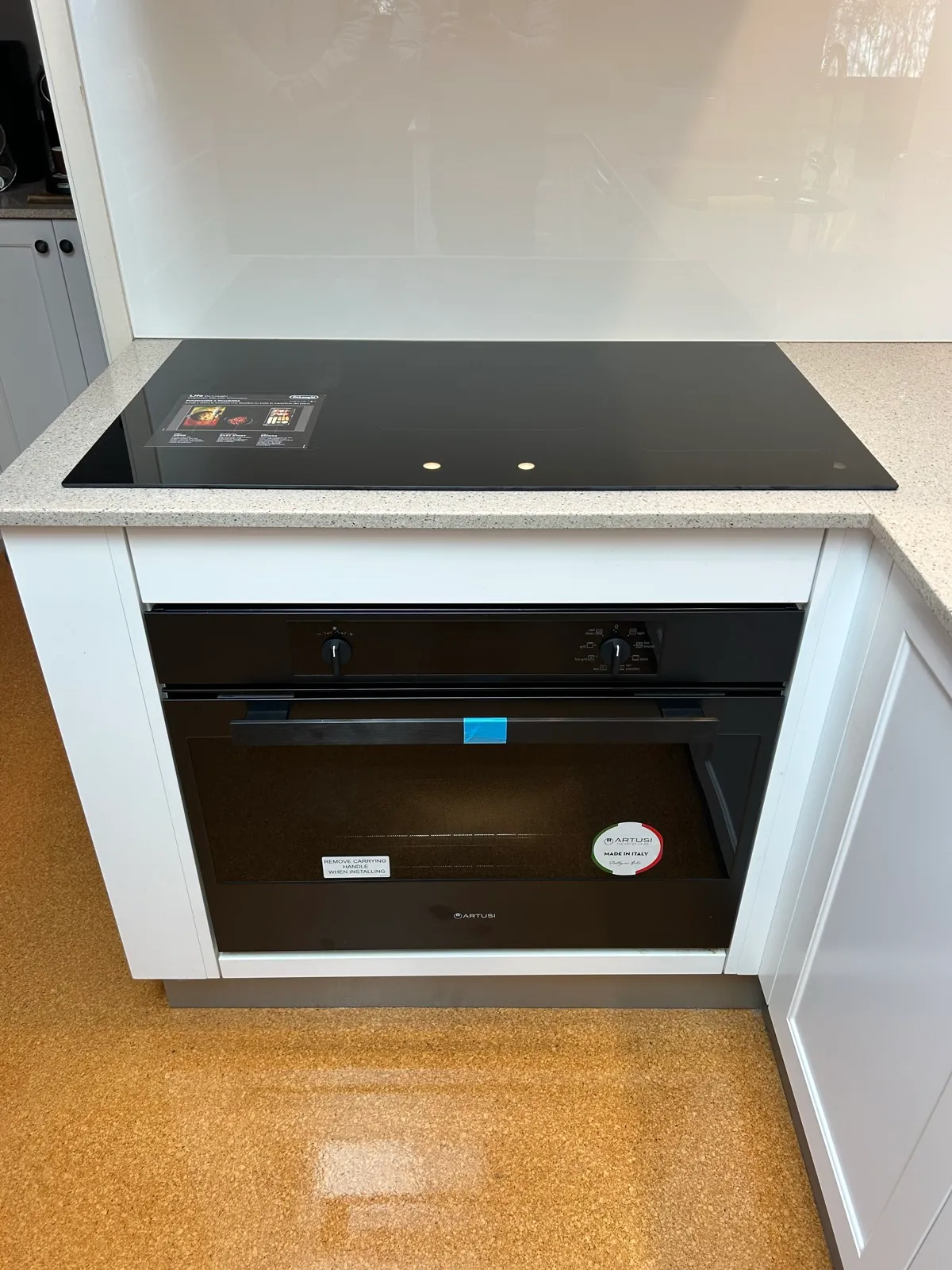
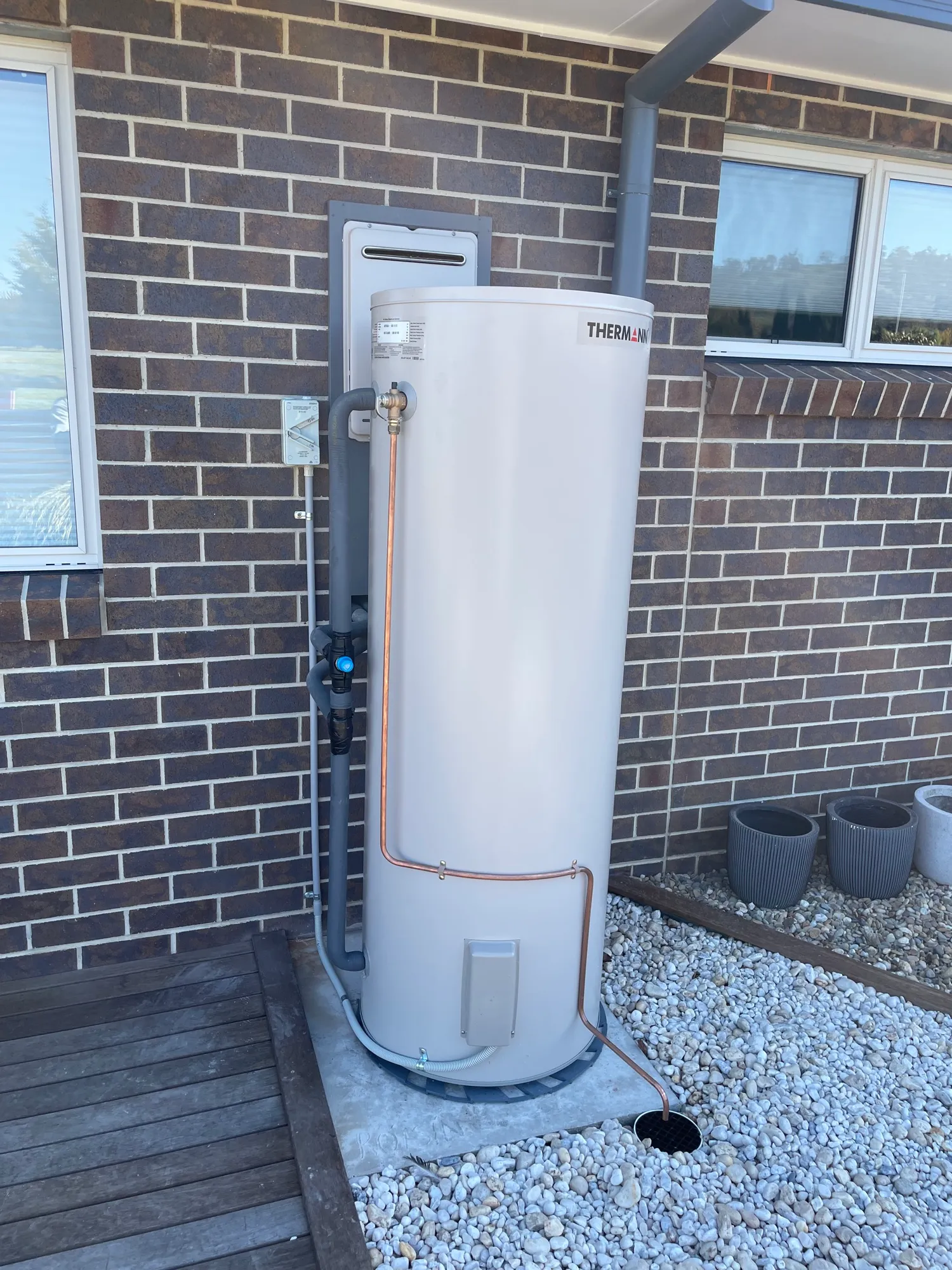
- Capacity. Can the main switch and the supply to the house take the extra load, particularly if you also have an electric oven, induction cooktop, heat pump hot water or EV charger?
- Condition. An old board without safety switches, or with signs of heat damage, needs sorting out before anything new is added.
If the board needs work, plan every new circuit at once. Two or three splits, a heat pump and an EV charger all need space, so it is cheaper and neater to upgrade the board once than to come back each time. Our switchboard upgrade guide explains when an upgrade is needed, and if you are in the south, our Tuggeranong electricians page covers the older homes there.
Why is there an isolator next to the outdoor unit?
The wiring rules require it. AS/NZS 3000 clause 4.19 says air conditioners with a compressor must have a lockable isolating switch installed next to, but not on, the outdoor unit, and it has to isolate the whole system, including the indoor head. Access Canberra’s electrical fact sheet on split systems sets out how this applies in the ACT. If an indoor unit is supplied from a separate circuit, it needs its own isolator or a warning sign at the outdoor isolator.
The point is safety: an electrician or refrigeration technician can switch the system off at the unit and know it stays off while they work. Outdoor isolators are exposed to sun and weather, so they need to be rated for outdoor use and checked if they look cracked or faded.
What size split system do you need in Canberra?
Split systems are sold by their output in kilowatts (kW), and a reverse cycle unit has separate cooling and heating figures. The right size depends on the room’s floor area and ceiling height, insulation, window size and which way it faces, and whether it opens onto other rooms.
In Canberra, size for winter as well as summer. A unit that cools a living room comfortably in January can struggle on a minus 5 morning in July. Two things help:
- The Zoned Energy Rating Label. Air conditioners carry a Zoned Energy Rating Label that rates heating and cooling performance for hot, average and cold climate zones. Canberra falls in the cold zone, so compare models on their cold zone heating rating.
- A proper heat load assessment. A good installer measures the room rather than guessing from floor area alone. Oversized units cycle on and off; undersized ones run flat out and still leave you cold.
The ACT Government says reverse cycle air conditioners turn one unit of electricity into 3 to 6 units of heat, and are cheaper to run than portable electric heaters and far cheaper than gas heaters. YourHome adds that inverter split systems are the most efficient domestic air conditioners. For a Canberra home, a reverse cycle inverter split is the default choice.
How many split systems do you need, and is a multi-head better?
Start with the rooms you actually use. A split in the main living area and one in the main bedroom covers most households. Hallways and rarely used rooms often do not need their own unit.
You then have two ways to do more than one room:
- Several single splits. Each room gets its own indoor and outdoor unit and its own circuit. If one fails, the others keep working, and each can be sized exactly for its room.
- A multi-head system. Several indoor units run off one larger outdoor unit. That means less wall space taken up outside, but one outdoor fault affects every room, and the outdoor unit runs even when only one room is on.
From the electrical side, separate splits mean more circuits on the board, while a multi-head usually needs one larger circuit. Both need the isolators described above.
Where should the indoor and outdoor units go?
- Indoor unit: high on a wall where the air can blow along the length of the room, not straight onto a bed or the couch. It needs a path for the pipes and drain to the outside.
- Outdoor unit: on a level base with clear airflow, out of the way of bedroom windows (yours and the neighbours’) and close enough to the indoor unit to keep pipe runs short.
- Power path: we look at how the cable gets from the switchboard to the outdoor unit and the isolator before you settle on positions.
Who installs a split system in Australia?
Two licences are involved. Handling refrigerant needs a licence from the Australian Refrigeration Council (ARCtick). Under ARC Fact Sheet 13, a restricted ‘Splits’ licence only covers installing and decommissioning single-head split systems under 18 kW cooling capacity. It does not cover multi-head systems, larger systems, or service and repair, which need a full refrigeration and air conditioning (RAC) licence. You can check an installer’s licence at lookforthetick.com.au.
The electrical work is separate. In the ACT, installing low voltage wiring needs an unrestricted electrical licence; a restricted electrical licence, which some air conditioning technicians hold, only allows disconnecting and reconnecting. The new circuit, the switchboard work and the isolator are jobs for a licensed electrician. Ask your installer who is doing each part, and check both licences.
Is there ACT help with the cost?
Eligible homeowners can borrow $2,000 to $20,000 at 3% interest through the ACT’s Sustainable Household Scheme, and electric heating and cooling systems are on the list of eligible products. Concession card holders may also qualify for zero-interest loans. Schemes change, so check the current rules before you buy.
If you are pairing a split with ceiling fans, our guides on DC vs AC ceiling fans and fan vs air conditioner running costs explain how a fan lets you set the air conditioner a few degrees higher. To get the electrical side sorted, send us a photo of your switchboard and the rooms you want cooled and heated through our heating and cooling page.
Frequently asked questions
Does a split system need a dedicated circuit?
Yes. A fixed split system should have its own circuit from the switchboard with safety switch protection, sized to the manufacturer's requirements. Running it off an existing power point circuit risks nuisance tripping and overloaded cable.
Why does my outdoor unit have a switch next to it?
The wiring rules (AS/NZS 3000 clause 4.19) require a lockable isolating switch next to, but not on, the outdoor unit, so the system can be switched off safely for service. Access Canberra's electrical fact sheet explains how this applies to split systems in the ACT.
Can an air conditioning installer do the electrical work?
Only if they hold the right electrical licence. Access Canberra notes that installing low voltage wiring needs an unrestricted electrical licence, and a restricted licence only allows disconnecting and reconnecting. Many installers work with a licensed electrician for the circuit and isolator.
Is a multi-head system better than several split systems?
It depends on the home. A multi-head runs several indoor units off one outdoor unit, which saves wall space outside, but if the outdoor unit fails every room loses heating and cooling. Separate splits each have their own outdoor unit and circuit. Multi-heads must be installed by a full ARC licence holder.
What size split system do I need for a bedroom in Canberra?
It depends on the room size, insulation, windows and which way it faces, and in Canberra on how cold it gets in winter. Ask your installer to size the unit for heating as well as cooling, and compare models on their cold zone energy rating.
Can I get help paying for a split system in the ACT?
Eligible ACT homeowners can borrow $2,000 to $20,000 at 3% interest through the Sustainable Household Scheme, and electric heating and cooling systems are on the eligible product list. Rules change, so check the ACT Government page before you buy.
Conclusion
A split system is the most efficient way to heat and cool a Canberra room, but how well it runs depends on the electrical work behind it: a dedicated circuit, a switchboard with room for it, a compliant isolator outside and a unit sized for winter as well as summer. Plan every split you want at once, so the switchboard is only upgraded once. Fused Electrical Co is a family owned and run Canberra business, licensed and insured, with fixed-price quotes and a reply within 24 hours. Call 0434 913 935 or request your free quote online and book in before the summer rush.
Published Date:
Link copied!
Talk to a licensed Canberra electrician.
Family owned, rated 5.0 from 163 Google reviews. Serving Canberra, the ACT and Queanbeyan.
Article Sources / Publishing Guidelines
Sources
- accesscanberra.act.gov.au · Split Air conditioning units
- arctick.org · arc fact sheet 13
- lookforthetick.com.au
- climatechoices.act.gov.au · heating for your home
- climatechoices.act.gov.au · cooling for your home
- yourhome.gov.au · heating and cooling
- energyrating.gov.au · air conditioners
- climatechoices.act.gov.au · shs
At Fused Electrical Co, we are committed to publishing content that is accurate, trustworthy, and useful for our readers. To maintain these standards, we follow a rigorous process:
- All content is crafted to be clear, helpful, and regularly updated.
- We adhere to strict practices, including:
Editorial Guidelines
Fact-Check Content
Vet Expert Sources
Content Creation Process - If you have any questions, concerns, or if you’ve found an error in our content, please contact us.