

 Key Takeaways
- No new gas connections, existing gas can stay for now
The ACT has prevented new gas network connections since 8 December 2023. Homes with a gas meter can keep using it, and no rules yet force you to replace existing gas appliances.
- Most homes will not need three-phase power
ACT Government advice is that most homes can go all-electric on single-phase power. The switchboard is more often the issue: no spare space, old fuses or no safety switches.
- Plan the whole house, then upgrade in order
Check the switchboard once for everything you plan to add, then replace gas appliances as they come due. Hot water and heating usually give the biggest savings, with cooking last so you can close the gas account.
- Loans and rebates can help
The Sustainable Household Scheme offers loans of $2,000 to $20,000 at 3% for most households. Eligible concession card holders can get Home Energy Support rebates and zero-interest loans.
Going all-electric means replacing your gas hot water, heating and cooking with electric appliances, then closing the gas account. In the ACT, new homes have no choice: the ACT Government has prevented new gas network connections since 8 December 2023. Existing homes can keep their gas for now. The government has committed to phasing out fossil fuel gas by 2045 and ran a consultation from 5 August to 16 September 2026 on future rules for gas appliances, but no rules yet force you to replace a working gas appliance.
For most Canberra homes the electrical side is very doable. ACT Government advice is that most homes will not need three-phase power to go all-electric, but the switchboard often needs work, and planning it once for everything saves paying twice. A sensible order is hot water and heating first, cooking last, with solar, batteries and an EV charger fitted around them. Sustainable Household Scheme loans at 3%, and rebates for eligible concession card holders, can help with the cost. Our heating and cooling and switchboards and power pages cover the work we do.
Where is the ACT gas transition up to?
As of October 2026, this is what is in force and what is still being worked out.
- No new gas connections. Since 8 December 2023, new gas network connections are prevented in residential, commercial and community facility zones, and for residential buildings in other zones. A new connection includes installing a gas meter where there was not one. New homes in suburbs like Taylor and the Molonglo Valley are built all-electric as a result.
- Existing connections stay. If you already have a gas meter, you can keep using it. The regulation is due to be reviewed in 2026 and 2030.
- A 2045 phase-out. In August 2022 the ACT Government committed to phasing out fossil fuel gas use by 2045 at the latest. Its Integrated Energy Plan 2024-30 is the roadmap.
- Future appliance rules are being developed. The 2026 consultation on gas appliance regulation looked at options such as information at the point of sale, standards for rental properties and limits on installing new gas appliances. A draft regulation and impact analysis are still to come.
The practical upshot: you do not need to rip out a working gas heater tomorrow, but the best time to go electric is when a gas appliance is due for replacement. Buying a new gas appliance now means paying for something that may have to go before the end of its life.
What does going all-electric mean for your switchboard?
Every gas appliance you replace becomes an electrical load. A heat pump, a ducted or split reverse cycle system and an induction cooktop each typically need their own circuit, and an EV charger adds another.
The ACT Government’s page on electrical upgrades to support electrification puts it plainly: older switchboards may not have enough capacity, spare slots for new circuits, new circuit breakers or compliant safety features for modern electric appliances. When a board is upgraded, the electrician has to bring it up to the current AS/NZS 3000 wiring standard, and it is sensible to leave spare capacity for later.
In Canberra we often see:
- Ceramic fuses in homes from the 1970s and 80s, which need replacing before new circuits can be added. Our guide to ceramic fuses and old fuse boxes explains why.
- Full boards in 1990s and 2000s homes, with no room for another breaker.
- No safety switches on some circuits, which a new circuit and modern rules will not allow.
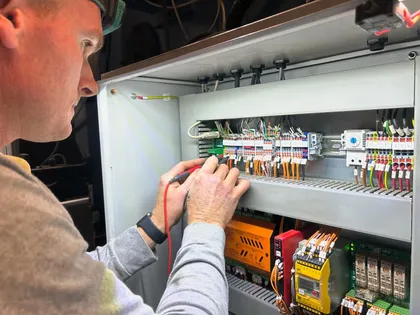
Our guide to switchboard upgrade costs in Canberra covers what is involved. If you are going all-electric, give us the full list of what you plan to add, even if it is spread over years, so the board is planned once. Our switchboards and power work covers new boards, safety switches and extra circuits.
Do you need three-phase power?
Most Canberra homes have single-phase power. Some newer homes have three-phase. The ACT Government’s advice is that in most cases homes will not need to upgrade to three-phase to go all-electric.
It may be worth considering if you have:
- very large heating and cooling systems or commercial-grade kitchen appliances
- a fast EV charger (above about 7 kW), or more than one EV charging often
- a solar system larger than 10 kW
- a very large home with high energy use.
A supply upgrade involves Evoenergy, the local network, as well as your electrician. Before going down that path, there are cheaper ways to fit more on a single-phase supply.
Load management
The total load only becomes a problem if everything runs at once. Ways to avoid that include:
- Efficient appliances. A heat pump and an inverter reverse cycle system use far less power than old resistive heaters and electric tanks.
- Timers. Run the hot water heat pump in the middle of the day and the EV charger overnight, so they do not overlap with the evening cooking and heating peak.
- Load-managed EV chargers. Many chargers can monitor the house load and slow down when other appliances are running.
- Solar and batteries. These supply more of your daytime and evening load from your own system.
What order should you upgrade in?
There is no single right order, but this is the sequence that makes sense for most Canberra homes:
- Plan and check the switchboard. List every gas appliance and anything else you want to add, then have an electrician look at the board and the supply. The ACT Government’s Make Your Next Choice Electric tool can help you put a plan together to share with your electrician.
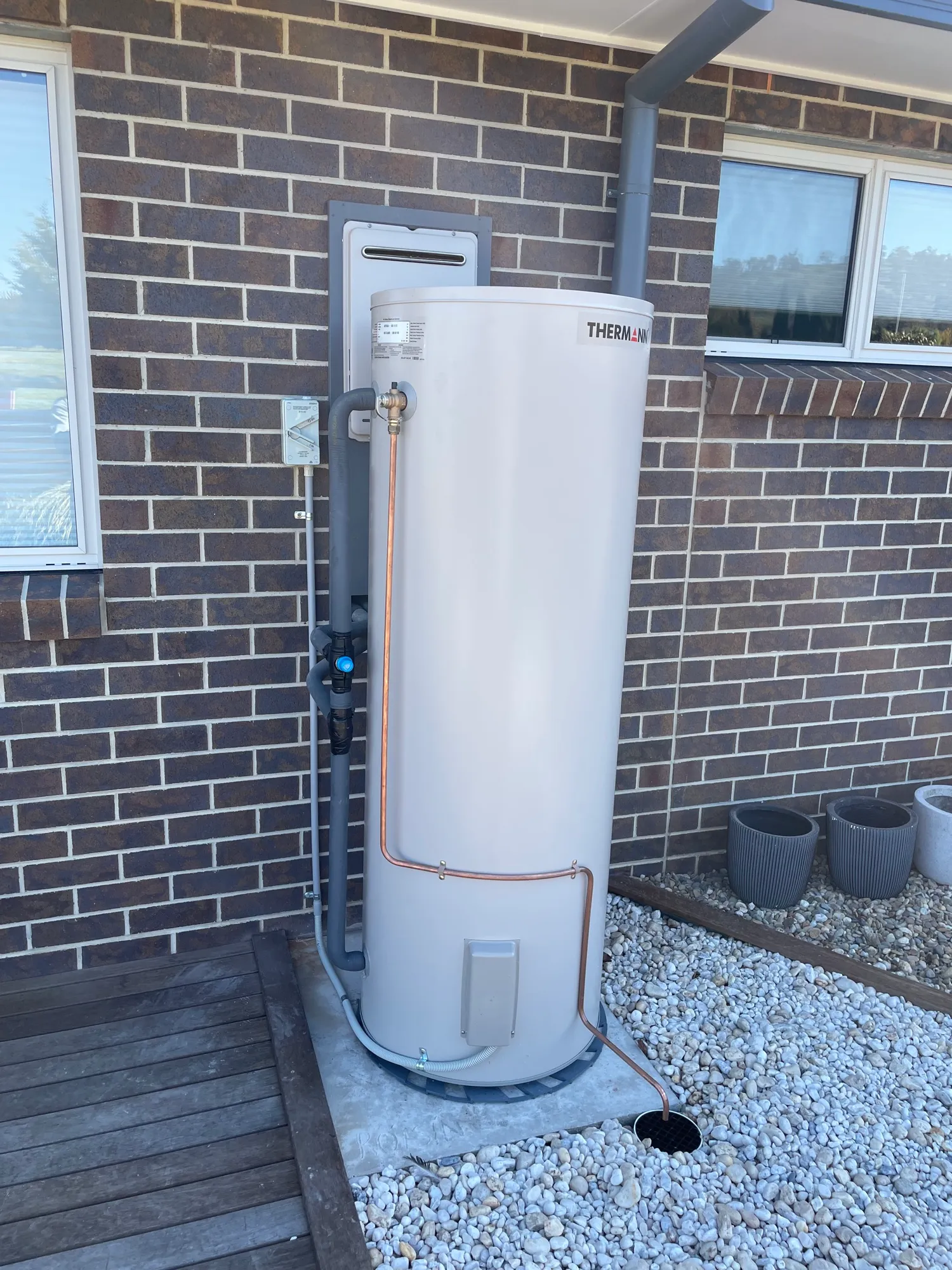
- Hot water. A heat pump is often the first swap, especially if your gas or electric tank is getting old. Our guide to heat pump hot water in Canberra covers cold-climate models and timers.
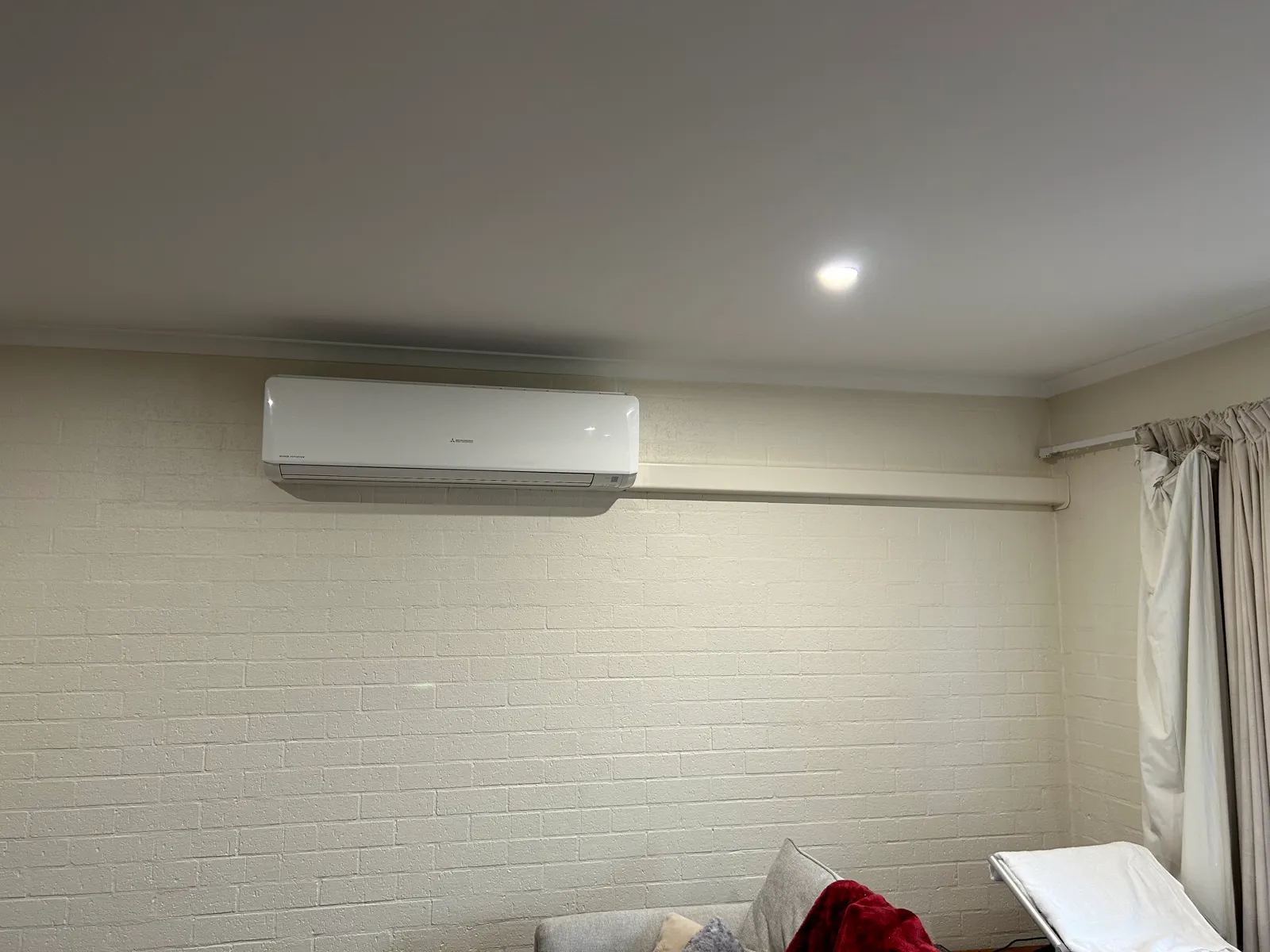
- Heating. Canberra winters make heating a big job. Reverse cycle split or ducted systems heat and cool, and our heating and cooling page covers the install side.
- Cooking. An induction cooktop and electric oven usually come last. Once they are in, a licensed gasfitter caps the line and you can close the gas account and stop paying the daily supply charge.
- Solar, batteries and EV charging. These are not gas replacements, but they change how much you save. Our guides on whether a solar battery is worth it in Canberra and EV charger installation cover those decisions.
If an appliance fails early, swap the order. The aim is to never replace a broken gas appliance with another gas one.
What ACT loans and rebates are available?
Schemes change, so check the ACT Government pages before you commit. As of October 2026:
- Sustainable Household Scheme. Loans of $2,000 to $20,000 at 3% interest for most households, repaid over up to 10 years with no establishment or account fees. Eligible products include hot water heat pumps, electric heating and cooling, electric stove tops, batteries, EVs and EV chargers, and ceiling insulation. Rooftop solar and switchboard upgrades are not on the list. Previous participants and applications approved before 1 July 2026 are capped at $15,000 in total, and you need to attend a free one-hour workshop (Sustainable Household Scheme).
- Home Energy Support Program. Homeowners with a Pensioner Concession Card, DVA Gold Card or Health Care Card can get a rebate of 50% of supply and installation, up to $2,500 per product and $5,000 in total, for solar, reverse cycle heating and cooling, hot water heat pumps, electric stove tops and ovens, and ceiling insulation. Property value limits apply. Participants can also get a zero-interest loan of up to $10,000 (Home Energy Support rebates).
- Access to Electric Program. For homeowners regularly struggling to pay energy bills, this program can fully fund gas to electric upgrades and ceiling insulation (Access to Electric). Check the page or call Care Financial Counselling to see if it is open and if you qualify.
When you ask us to quote, tell us which scheme you are using so the quote and paperwork suit it.
Frequently asked questions
Can I still get a new gas connection in Canberra?
No. Since 8 December 2023 the ACT has prevented new gas network connections in residential zones and for homes in other zones, so new homes are built all-electric. A connection includes installing a gas meter where there was not one before.
Will the ACT Government make me remove my gas appliances?
Not as things stand. Existing gas connections can keep being used. The ACT has committed to phasing out fossil fuel gas by 2045, and it consulted from 5 August to 16 September 2026 on future rules for gas appliances. A draft regulation is still to come, so check the Climate Choices website for updates.
Do I need three-phase power to go all-electric?
Usually not. The ACT Government says most homes will not need three-phase power to go all-electric. It may be worth it for very large heating and cooling systems, EV chargers above about 7 kW, solar systems over 10 kW or very large homes. An electrician can check your load and tell you.
Will I need a new switchboard to go all-electric?
Not always, but older boards often need work. A board with ceramic fuses, no spare space for new circuits or no safety switches may need upgrading. When a board is upgraded, it has to meet the current wiring rules (AS/NZS 3000), and it is a good time to leave spare capacity for future circuits.
Can I get an ACT loan for switchboard work?
Switchboard upgrades are not on the Sustainable Household Scheme's list of eligible products. The loans cover the appliances themselves, such as heat pumps, reverse cycle systems, electric cooktops, batteries and EV chargers, and their installation. Check with the scheme before you apply.
What happens to my gas meter when I go all-electric?
A licensed gasfitter needs to disconnect and cap the gas line to each appliance you remove. Once your last gas appliance is gone, contact your gas retailer to close the account so you stop paying the daily supply charge, and ask about removing or disconnecting the meter.
Conclusion
Going all-electric in Canberra is a series of sensible upgrades, not one big job. Start with a plan, check your switchboard can handle everything on it, and replace gas appliances in the order that saves you the most, usually hot water and heating first, with cooking last so you can close the gas account. Check what ACT loans and rebates you qualify for before you sign anything. Fused Electrical Co is a family owned and run Canberra business with 35+ years of combined experience, licensed and insured, and we give fixed-price quotes and reply within 24 hours. Call us on 0434 913 935 or request your free quote online today.
Published Date:
Link copied!
Talk to a licensed Canberra electrician.
Family owned, rated 5.0 from 163 Google reviews. Serving Canberra, the ACT and Queanbeyan.
Article Sources / Publishing Guidelines
Sources
- climatechoices.act.gov.au · preventing new gas network connections
- climatechoices.act.gov.au · stakeholder consultation on gas appliance regulations now open
- climatechoices.act.gov.au · electrical upgrades to support electrification
- climatechoices.act.gov.au · shs
- climatechoices.act.gov.au · sustainable household scheme
- climatechoices.act.gov.au · home energy support rebates for homeowners
- climatechoices.act.gov.au · access to electric program
At Fused Electrical Co, we are committed to publishing content that is accurate, trustworthy, and useful for our readers. To maintain these standards, we follow a rigorous process:
- All content is crafted to be clear, helpful, and regularly updated.
- We adhere to strict practices, including:
Editorial Guidelines
Fact-Check Content
Vet Expert Sources
Content Creation Process - If you have any questions, concerns, or if you’ve found an error in our content, please contact us.